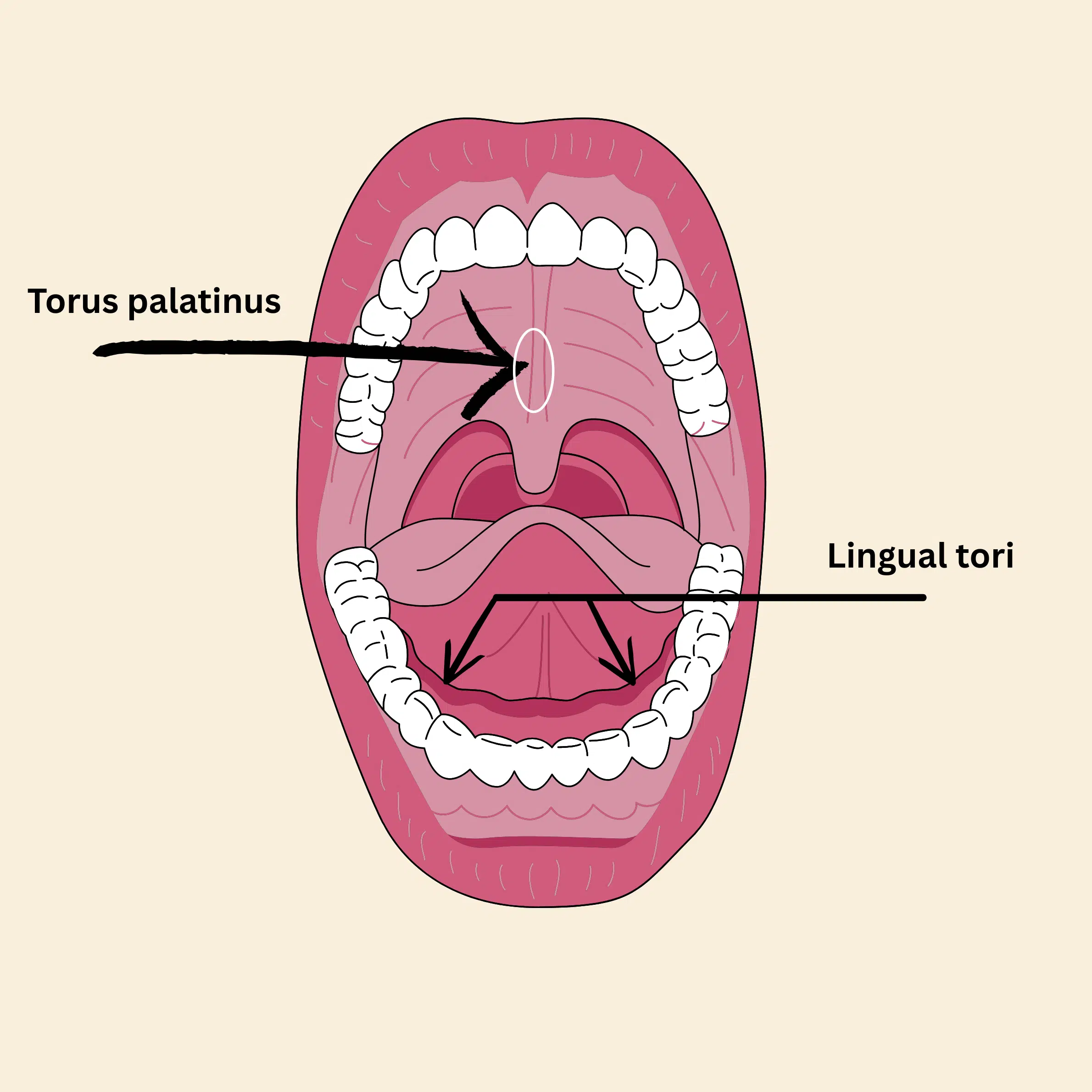
So, what exactly are oral exostoses? In simple terms, it refers to bony growths in the mouth, also known as oral tori. A single bony growth is called an exostosis. When more than one occurs, they are referred to as exostoses. These benign oral growths can appear on various parts of the mouth, including the hard palate and along the jawbone. Think of them as your body’s way of saying, “Hey, I’ve got some extra bone here!” The most common types include:
- Torus palatinus: A bony protrusion on the roof of the mouth.
- Torus mandibularis: Growths that occur along the lower jaw.
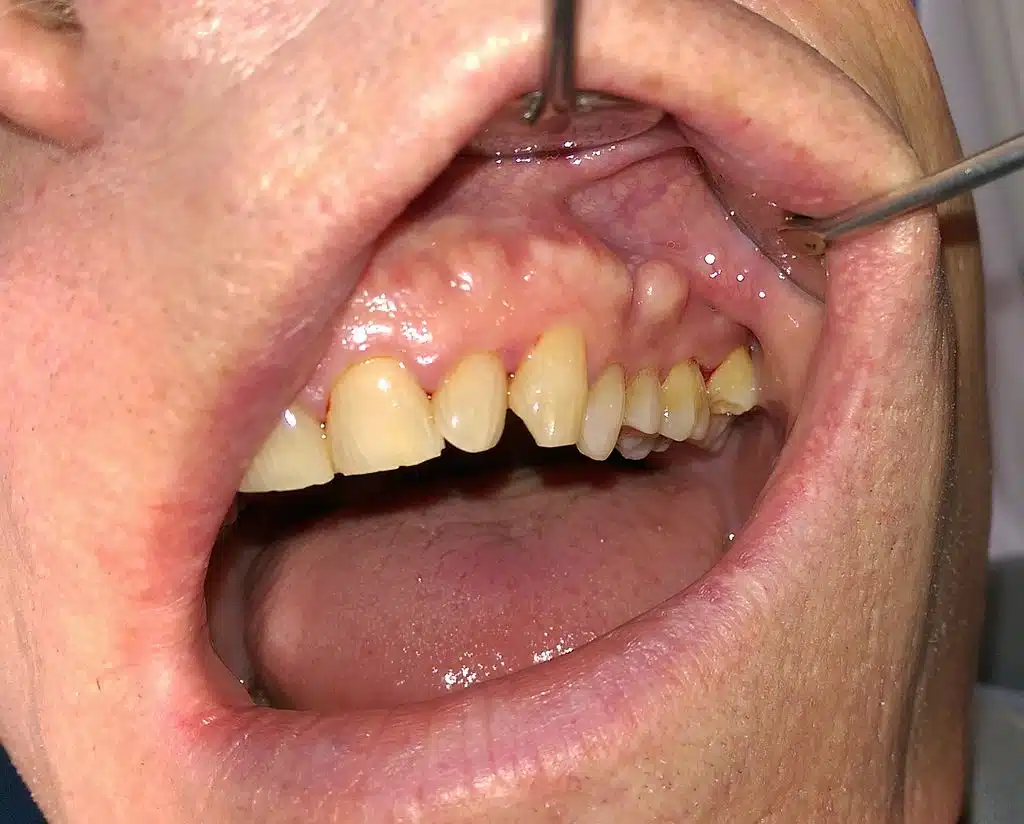
- Buccal exostosis: Bumps on the inside of the cheeks.
- Gingival exostosis: Growths on the gums.
- Alveolar ridge exostosis: Bony growths along the tooth-bearing areas.
These growths are typically non-cancerous and may not cause any symptoms at all, making them quite sneaky!
In fact, most patients are unaware they even have tori or buccal exostoses until a dentist points them out. They rarely cause problems on their own, but their presence can become a major concern when dentures are needed. Large mandibular tori in particular may make it difficult — or even impossible — to comfortably wear a lower denture. In such cases, removal may be necessary before prosthetic treatment can proceed.
Treatment options usually involve surgical removal with a bur and chisel or more modern laser-assisted removal. Traditional surgery tends to involve more postoperative swelling and a longer healing period, while laser procedures may reduce bleeding and shorten recovery time. Your dentist or oral surgeon can help determine which option is appropriate based on the size, location, and complexity of the bony growths.
Importance of recognizing symptoms
Recognizing symptoms associated with oral exostosis is crucial. While many people might have these bony protrusions in their mouth cavity, they often go unnoticed until they cause discomfort or complications. Ignoring symptoms could lead to issues like:
- Pain or discomfort when chewing or speaking.
- Difficulties with bite alignment.
- Persistent swelling in the gums or jaw area.
- The appearance of hard lumps in the mouth that could be mistaken for something more serious.
If left unchecked, these benign bone growths can become a nuisance. So, keeping an eye out for changes in your oral health is essential!
Overview of the blog post structure
This blog post will dive into the top 5 symptoms of oral exostosis you shouldn’t ignore. We will cover:
- Pain or discomfort in the jaw – what it feels like and when to seek help.
- Swelling in the gums or jaw area – how to differentiate normal from concerning swelling.
- Changes in bite alignment – how these bony growths can affect your dental health long-term.
- The presence of hard bumps in your mouth – physical symptoms to monitor over time.
This comprehensive guide aims to equip you with knowledge about oral exostosis, ensuring you recognize any potential red flags early on. Knowledge is power when it comes to your dental health!
Your smile deserves attention! Stay informed about changes in your oral health, and don’t hesitate to consult a professional if something feels off. Remember: proactive care beats reactive treatment any day!
Symptom 1: Pain or Discomfort in the Jaw
Explanation of pain types associated with oral exostoses
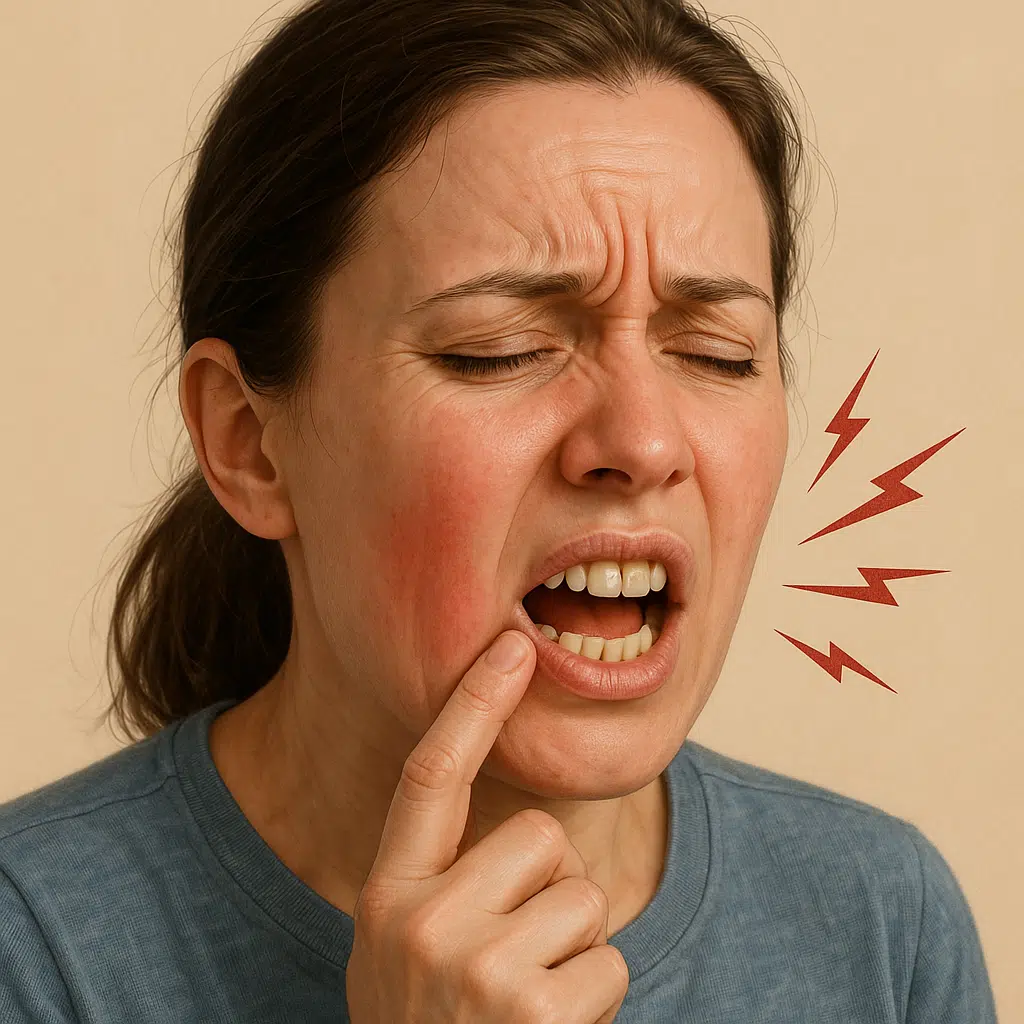
If you’ve ever felt a nagging discomfort in your jaw, it might not just be a sign of stress from your daily grind. Pain or discomfort in the jaw can be one of the first symptoms of exostosis oral. This pain can manifest in various ways, and understanding what you’re feeling is key to addressing it.
- Localized pain: This is when you feel discomfort right where the bony growths are located, like a gentle reminder that something’s up.
- Dull ache: You might experience a persistent ache that seems to radiate throughout your jaw, making you wonder if your jawbone has taken up an interest in heavy lifting.
- Shooting pain: Sometimes, you might feel sharp pangs that catch you off guard, especially when chewing or speaking. It’s like your mouth just decided to throw a surprise party – and not the fun kind!
- Tenderness: The area around the bony protrusions may feel tender to touch. You might find yourself avoiding certain foods just to keep things comfortable.
This discomfort could stem from pressure exerted by the bony growths in your mouth, which can lead to inflammation or irritation of surrounding tissues. In some cases, it may even affect your bite alignment, creating a ripple effect on how you chew and speak.
When to seek professional help
If you’re experiencing any type of jaw pain, it’s essential not to ignore it. Here are some signs that indicate it’s time to consult a dental professional:
- Your discomfort persists for more than a few days – no one wants an unwelcome guest hanging around!
- The pain intensifies over time or starts affecting your daily activities like eating or talking.
- You notice swelling or changes in the appearance of your gums near the painful area – this could indicate possible complications.
- If you have difficulty opening or closing your mouth comfortably – it’s best to get checked out before things escalate.
Pain is often an indicator that something needs attention. Don’t brush off those signals! Early intervention can lead to more effective treatment options for oral exostosis, reducing potential complications down the line.
Symptom 2: Swelling in the Gums or Jaw Area
Causes of swelling related to exostosis oral
Swelling in the gums or jaw area can be one of the more noticeable symptoms of exostosis oral. But what causes this swelling? Well, think of it as your body’s way of throwing a little tantrum! Here are some common culprits:
- Pressure from bony growths: As bony protrusions in the mouth cavity grow, they can create pressure on surrounding tissues, leading to inflammation and swelling.
- Irritation: If food particles or plaque get trapped around these growths, it can cause irritation and subsequent swelling. It’s like having a party in your mouth that nobody wanted to be invited to!
- Infection: In some cases, a localized infection can occur, resulting in significant swelling. This is your body’s way of saying, “Help! I need a dentist!”
- Gingivitis: Inflammation of the gums due to poor oral hygiene can exacerbate swelling around exostosis areas. So, brushing and flossing are essential-consider them your mouth’s bodyguards!
If you notice any unusual swelling, it’s crucial to pay attention. It could be a sign that something more serious is brewing beneath the surface.
Differentiating between normal and concerning swelling
Not all swelling is created equal! Knowing when to chill and when to seek help is vital. Here’s how you can differentiate between normal and concerning swelling:
- Normal Swelling: A slight puffiness around the gum line or jaw area that comes and goes might just be an indication of irritation from food or brushing too hard.
- Concerning Swelling: If you experience persistent or increasing swelling that lasts more than a few days, it’s time to consult a professional. This could indicate an underlying issue related to oral exostosis.
- Pain Accompaniment: Normal swelling might not hurt much; however, if there’s pain associated with the swelling-especially if it intensifies-don’t ignore it!
- Changes in Gum Color: Healthy gums should be pink; if they appear red, swollen, or bleeding along with the swelling, this could signal gingivitis or another issue.
Your mouth is talking! Pay attention to what it’s saying. Swelling might seem minor at first but can escalate into more serious problems like infections if left unchecked. Regular check-ups with your dentist are key!
Matthew Ferguson 57, CC BY-SA 3.0 <https://creativecommons.org/licenses/by-sa/3.0>, via Wikimedia Commons
Symptom 3: Changes in Bite Alignment
Description of how exostosis can affect bite
Imagine your mouth as a finely tuned orchestra, where each tooth plays its part in harmony. Now, throw in some oral exostoses and suddenly, that symphony turns into a cacophony! Changes in bite alignment are a common symptom of oral exostosis, and they can be quite the nuisance.
As those bony growths in the mouth develop-be it torus palatinus or torus mandibularis-they can interfere with how your teeth come together. Here’s how:
- Pressure Points: When these bony protrusions push against teeth, they can create uneven pressure, leading to a misaligned bite. Think of it as one musician playing too loudly and throwing off the entire performance.
- Shifting Teeth: Over time, the displacement caused by these growths may result in teeth shifting positions. It’s like trying to fit a square peg into a round hole-something’s gotta give!
- Tenderness and Discomfort: The discomfort from misalignment can lead to further issues like jaw pain or headaches. Your body might start sending out distress signals, reminding you that something is amiss.
If you notice your bite feels different or if you’re experiencing discomfort while chewing, it might be time to investigate whether oral exostosis is at play.
Potential long-term impacts on dental health
Inevitably, ignoring changes in bite alignment due to dental exostosis can lead to some serious long-term consequences. Here’s what could happen if you let those pesky bony growths take center stage:
- Cavities and Tooth Decay: Misaligned bites can make certain areas harder to clean, increasing the risk of cavities. If your toothbrush can’t reach those nooks and crannies, plaque will throw a party-and not the fun kind!
- TMD (Temporomandibular Disorder): A misaligned bite can stress your jaw joints over time, leading to TMD. This could result in jaw pain, clicking sounds when opening your mouth, or even migraines. Ouch!
- Dental Anomalies: The longer you wait to address bite issues caused by oral tori, the more likely you are to develop other dental anomalies that may require extensive treatment.
- Aesthetic Concerns: A misaligned bite may affect your smile’s aesthetics too! If you’re self-conscious about how your teeth line up, it could impact your confidence-and we all know how important a radiant smile is!
Your dental health is interconnected! Changes in bite alignment due to exostosis oral are not just about comfort; they can have lasting effects on overall oral health. Don’t hesitate-consult with a professional if you notice any changes!
Symptom 4: Difficulty Chewing or Speaking
How oral exostosis can interfere with daily activities
Picture this: you’re at a dinner party, and everyone is laughing and enjoying their food. But you? You’re over here struggling to chew your delicious meal because of exostosis oral. It’s like trying to run a marathon in flip-flops-definitely not ideal! Difficulty chewing or speaking can be a significant symptom of oral exostosis, and it can really put a damper on your social life.
As those pesky bony growths in the mouth develop, they can create discomfort that makes even the simplest tasks like biting into a sandwich feel like an Olympic event. Here’s how this might play out:
- Chewing Challenges: When bony protrusions, such as torus mandibularis or torus palatinus, push against your teeth or cheeks, it can lead to pain while chewing. It’s as if your mouth is saying, “Thanks, but no thanks!” to that juicy burger.
- Sore Spots: The friction between these growths and the inside of your mouth can create sore spots that make speaking feel like an endurance test. You might find yourself avoiding certain words just to keep from wincing!
- Mouth Movement Restrictions: If the growths are large enough, they may restrict how wide you can open your mouth. Imagine trying to sing your favorite song but only being able to whisper the lyrics-frustrating, right?
If you notice these difficulties creeping into your daily life, it’s time to take note! Ignoring them could lead to more significant issues down the line.
Signs that indicate a need for evaluation by a dentist
If you’ve been experiencing difficulty chewing or speaking due to oral exostosis, there are some telltale signs that should prompt you to seek professional help:
- Persistent Pain: If the discomfort lasts longer than a few days or worsens over time-don’t wait for it to go away on its own!
- Avoidance Behavior: If you find yourself avoiding certain foods or conversations because of pain-this is not just an inconvenience; it’s a signal from your body!
- Mouth Opening Issues: Difficulty opening your mouth wide enough for normal activities like yawning or eating could indicate that those bony growths need attention.
- Speech Changes: If friends start asking why you’re mumbling or slurring words, it might be time for a dental check-up!
Your ability to chew and speak comfortably is essential for enjoying life! Don’t hesitate to reach out to a dental professional if you’re facing challenges related to exostosis oral. Early intervention could save you from more complex treatments later!
Symptom 5: Presence of Hard Bumps in the Mouth
Description of physical symptoms to look for
So, you’ve noticed some hard bumps in your mouth? Well, it’s time to pay attention! These hard lumps could be a sign of oral exostosis, and while they might not cause immediate alarm, they can lead to more serious issues if left unchecked. Here are some characteristics to look for:
- Location: These bony growths can appear on various parts of the mouth, including the hard palate (think torus palatinus) or along the jawline (hello, torus mandibularis). They might even pop up on the inside of your cheeks as buccal exostoses.
- Texture: Feel free to poke around (gently!). If you notice that these bumps feel firm and hard rather than soft or swollen, you’re likely dealing with benign oral growths.
- Size: While some bumps may remain small and asymptomatic, others can grow larger over time. If they start feeling like they’re auditioning for a role in a monster movie, it’s definitely time to consult your dentist!
- Pain or Discomfort: Although many cases are asymptomatic, if these growths start causing discomfort or pain while eating or speaking, that’s your cue to take action.
If you’re unsure about what you’re feeling in your mouth, don’t hesitate to reach out to a dental professional. They can help determine whether those pesky bumps are just harmless bone growths or something that requires further investigation.
Importance of monitoring changes in oral health over time
Your mouth is a window into your overall health! Monitoring changes related to an oral exostosis, such as the presence of hard lumps in your mouth, is crucial for maintaining good oral hygiene. Here’s why keeping an eye on these changes matters:
- Early Detection: Noticing changes early can help catch potential complications before they escalate. Think of it as being proactive rather than reactive-your future self will thank you!
- Avoiding Misdiagnosis: Hard bumps can sometimes resemble other conditions that may require different treatments. By staying vigilant and reporting any changes to your dentist, you reduce the risk of misdiagnosis.
- Treatment Options: If those bony protrusions start causing problems, there are various treatment options available-from monitoring the growths through regular check-ups to considering oral surgery for exostosis. The earlier you address them, the more options you’ll have!
- Mouth Health Matters: Keeping track of any new developments in your oral cavity helps ensure that you’re maintaining optimal oral health. After all, a healthy smile is a happy smile!
Your mouth is like a garden-regular maintenance keeps it flourishing! Make sure to monitor any changes and consult with your dentist about any concerns regarding oral exostosis. Your smile deserves it!
Your Call to Action
As we wrap up this exploration of oral exostoses, it’s clear that recognizing the symptoms is crucial for maintaining your oral health. We’ve covered:
- Pain or discomfort in the jaw
- Swelling in the gums or jaw area
- Changes in bite alignment
- Difficulty chewing or speaking
- Presence of hard bumps in the mouth
The significance of these symptoms cannot be overstated. Ignoring them could lead to complications that are easily avoidable with early intervention.
Your dental health is interconnected with your overall well-being! If you’re experiencing any of these symptoms, don’t hesitate to reach out to a dental professional. Early detection and treatment options for an oral exostosis, including dental torus removal, can save you from more extensive procedures down the line.
According to a 2012 Case Reports in Dentistry paper, Er:YAG lasers have been successfully used to excise mandibular tori and smooth torus palatinus exostoses, offering good clinical healing though sometimes requiring more operative time than conventional burs. PMC
Clinical review sources also support laser removal as less traumatic with reduced post-operative pain, swelling, and bleeding. Dentistry Today+1
Current Understanding of Causes and Symptom Relief
The exact cause of oral tori is not fully understood. However, studies suggest they are influenced by a combination of genetic and environmental factors. Environmental contributors include parafunctional habits such as bruxism (tooth grinding) and clenching, as well as occlusal stress. Research also indicates a higher prevalence of mandibular tori in patients with TMD (temporomandibular disorders) or excessive bite force. Thus, the bony over-growth may be a reaction to the excessive forces placed on the teeth and underlying bone. Sort of nature’s way of “bulking up” against stress.
Because these bony growths develop slowly and progressively, there is currently no proven way to prevent them. Instead, most home measures focus on symptom relief and reducing irritation:
- Warm saltwater rinses: Can reduce irritation and soothe tissues around the growths.
- Aloe vera gel: Offers mild anti-inflammatory relief when applied to irritated areas.
- Good oral hygiene: Helps reduce local irritation from plaque or trapped food near tori.
- Soft food choices: Avoiding very hard or abrasive foods may minimize trauma to areas where exostoses protrude.
Your mouth is an ecosystem! While you can’t prevent an oral exostosis from forming, supportive care can reduce discomfort. Remember: their development is linked to genetics and bite forces more than daily hygiene habits.