
helpful allies. Across many traditional systems, herbs have been used to support oral hygiene, soothe inflamed tissue, help control odor-causing bacteria,
and freshen breath. Today, emerging clinical research suggests that some botanicals may complement brushing, flossing, and professional care. Many people are now exploring herbs for oral health as a preventive complement to brushing, flossing, and professional dental care. Here’s the key idea: herbs for oral health can be supportive, but they aren’t magic. They require a little know-how to use safely and effectively.
Below are eight practical principles—rooted in both dental common sense and evidence-informed herbal guidance—to help you get benefits without unintended side effects.
Using Herbs for Oral Health: 8 Principles for Safe, Smart Use
1) Think “whole-mouth support,” not single-symptom fixes
Conventional care often targets a specific endpoint (plaque levels, pocket depth, a painful tooth). Plant-based approaches are frequently used more
holistically—aiming at underlying drivers such as inflammation, microbial imbalance, tissue irritation, or even dry mouth.
Two people can describe the same symptom—“my gums feel irritated”—yet have very different causes. One may need anti-inflammatory support (irritation from
aggressive brushing, mouth breathing, or an inflamed gumline). Another may benefit more from antimicrobial strategies (biofilm control, tongue hygiene,
or targeted rinses). The goal is prevention and balance, not chasing a single “miracle” ingredient.
2) Not all botanicals are the same strength: food herbs vs. remedies
For oral use, it helps to think in three practical categories:
- Food herbs (daily): Generally gentle options like garlic, ginger, parsley, and peppermint used in meals or teas.
- Gentle medicinal herbs (short-term): For example, chamomile tea as a soothing rinse, sage tea as a traditional antimicrobial rinse, or green tea as a supportive mouthwash.
- Stronger remedies (use cautiously): Examples include diluted clove oil for temporary tooth discomfort, or concentrated turmeric pastes used briefly and carefully.
“More” isn’t always better. Once symptoms improve, it’s usually wise to taper back rather than using stronger approaches indefinitely.
3) Dosage, quality, and form matter (a lot)
Botanicals are not standardized like prescription medications. Two products labeled the same can differ in potency and purity.
Choose reputable brands and avoid products with unclear sourcing or questionable additives—especially anything you’ll place on oral tissues.
Also consider form:
- Tea/rinse: Often gentler and easier to tolerate for sensitive mouths.
- Gel/paste: More concentrated and sometimes more irritating—use for limited time.
- Essential oil: Highly concentrated—generally requires dilution and extra caution.
A good rule: start low (diluted, short contact time, once daily) and increase only if tolerated.
4) “Natural” doesn’t automatically mean safe
A common misconception is that plant-based equals harmless. In reality, the mouth is delicate tissue. Some botanicals can cause burning, irritation,
allergic reactions, or problems when used too often or at too high a concentration.
- Clove oil: Often used for short-term tooth discomfort, but undiluted or repeated use can irritate or burn tissue.
- Turmeric/curcumin: Promising in studies for plaque and gingival inflammation support, yet can stain surfaces and may irritate some mouths if used too concentrated or too frequently.
- Essential oils: Potent and more likely to irritate if used “straight.”
If you’re pregnant, immunocompromised, managing chronic conditions, or on medications (especially blood thinners), it’s smart to run your plan by a clinician.
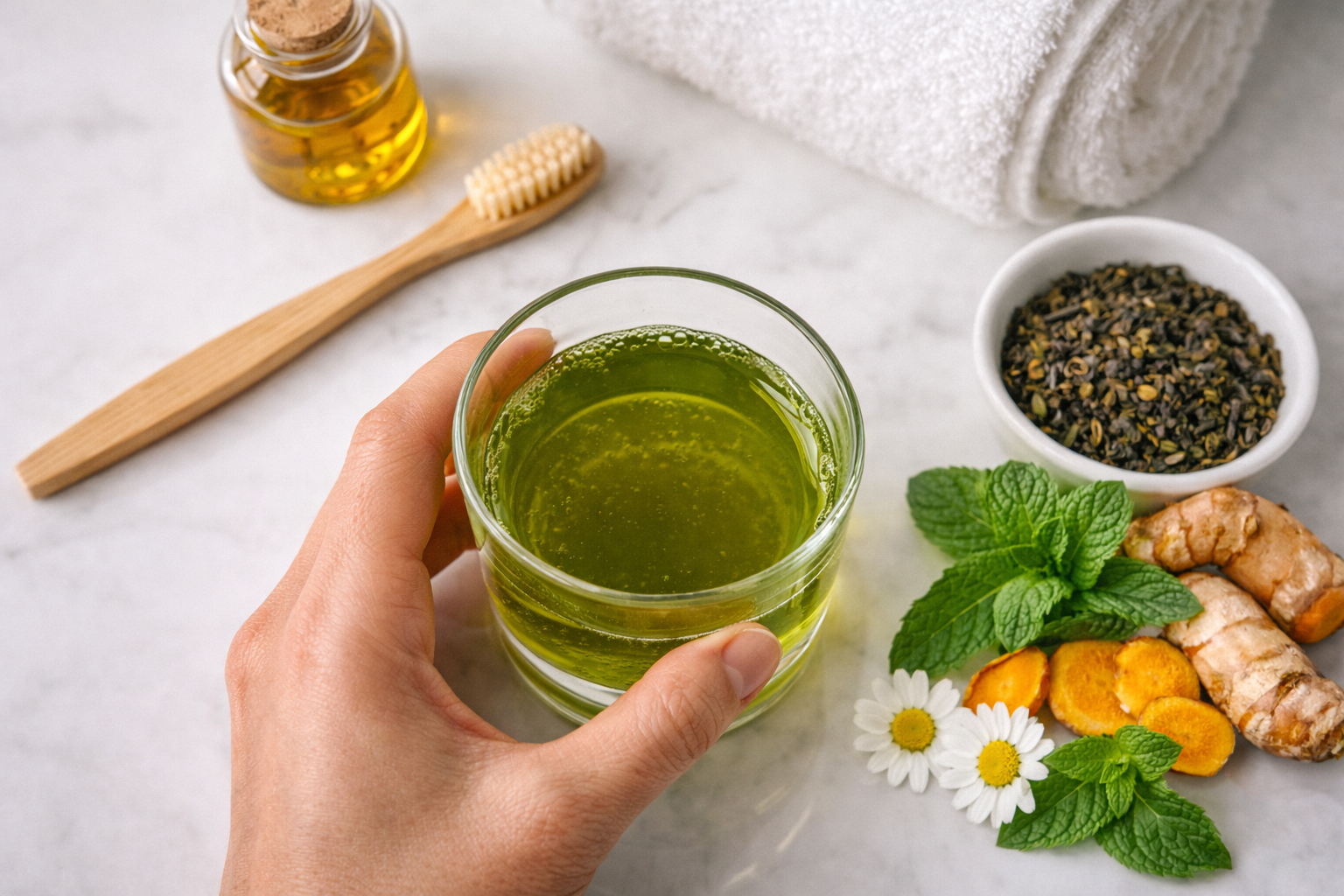
Using herbs for oral health as a gentle mouth rinse is one of the safest ways to start.
5) Preparation changes the outcome (safety + effectiveness)
When using herbs for oral health, how you prepare a botanical can change how it behaves in the mouth. Choose the method that fits your goal and your tolerance.
Visual suggestion (optional): Insert 3–4 images here.
- Whole cloves + a dropper bottle (alt: “Clove oil used cautiously for temporary tooth discomfort”)
- Turmeric powder or root (alt: “Turmeric/curcumin used for gum support in short-term routines”)
- Green tea leaves or brewed cup (alt: “Green tea rinse as an adjunct to brushing and flossing”)
- Peppermint sprigs (alt: “Peppermint tea as a gentle breath-freshening rinse”)
Gentle rinses (easy, low-risk starting point)
- Green tea rinse: Rich in catechins; research has examined green tea mouthwash as an adjunct to mechanical plaque control. (Study link)
- Chamomile tea rinse: A traditional soothing option for irritated gums (especially when the tissue feels “hot” or inflamed).
- Sage tea rinse: Traditionally used for oral freshness and microbial support.
- Peppermint tea rinse: Commonly used for breath freshening and a clean mouthfeel.
Topicals and pastes (more targeted, more caution)
- Diluted clove oil: Use a tiny amount on a cotton swab and apply briefly to the affected area—avoid prolonged contact.
- Turmeric paste: If you experiment, keep contact time short, rinse thoroughly, and avoid abrasive scrubbing (staining risk).
Chewing/fresh herbs (traditional practices)
- Parsley or basil: Often used to reduce food odors after meals.
- Traditional chewing sticks (e.g., neem): Used historically for mechanical cleaning and freshness (still, technique and hygiene matter).
Whatever you use, remember: rinses and botanicals should support your routine—not replace brushing, flossing, interdental cleaning, and professional evaluation.
6) Monitor for reactions and stop quickly if something feels “off”
If you notice burning, swelling, new sores, worsening bleeding, or increased sensitivity, stop immediately. Some people are sensitive to certain plant families
(for example, those with ragweed allergies can sometimes react to chamomile). When in doubt, choose a gentler approach or skip the herb entirely.
7) Interactions can be real—especially if you’re using multiple products
Many people stack: herbal rinses, essential oils, whitening products, prescription rinses, supplements, and medications. That combination can be unpredictable.
Keep a simple list of what you’re using and share it with your dentist—especially if you have gum disease risk factors like diabetes, dry mouth, or smoking history.
8) Choose credible sources (and know when herbs are the wrong tool)
Social media “DIY mouthwash” recipes often skip dosing, dilution, and safety guidance. Look for evidence-informed dental and herbal sources.
For example, curcumin mouthwash has been studied for anti-plaque and anti-gingivitis effects and has been compared to chlorhexidine in clinical research.
(PubMed link)
And just as important: botanicals are not a substitute for diagnosis. If you have bleeding gums, persistent bad breath, a toothache, swelling, loose teeth,
or sores that don’t resolve, you need a professional evaluation.
Practical “Safe Start” Routine (Simple, Conservative, and Dentist-Friendly)
- Foundation first: Brush twice daily, clean between teeth daily, and don’t ignore the gumline.
- Add one gentle rinse: Start with a mild tea rinse (e.g., green tea) once daily for 7–10 days.
- Track your response: Less bleeding? Less irritation? Better breath? If it worsens, stop.
- Escalate cautiously: Only consider stronger topicals briefly—and avoid undiluted essential oils.
- Reassess: If symptoms persist, treat that as a signal to check for plaque retention, gum disease, dry mouth, reflux, or other root causes.
Final Thoughts
Used wisely, herbs for oral health can be a helpful layer of prevention—especially when they support gum comfort, breath freshness, and a balanced oral environment.
But the foundation stays the same: consistent home care and regular professional checkups.
If you’d like to explore vetted wellness-support options beyond the spice cabinet, you can also browse my practitioner-grade dispensary resources here:
ToothWizVitamins.
And for more curiosity-driven dental education, you can visit:
Weird Dental Facts.
Disclaimer: This article is for educational purposes and is not medical advice. Talk with a dentist or qualified professional before using herbs, especially if you have medical conditions or take medications.
References (selected)
- Curcumin mouthwashes and gingivitis/plaque research:
PubMed record - Green tea mouthwash as an adjunct to mechanical plaque control:
MDPI Dentistry Journal article