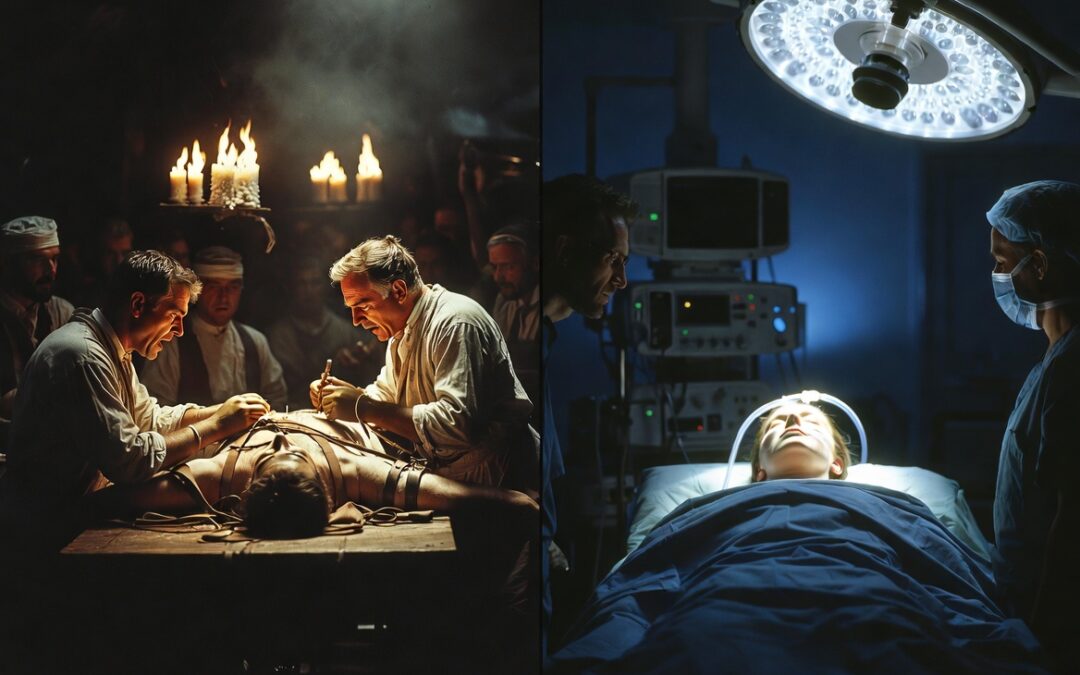
Who invented anesthesia—and who truly deserves the credit for ending surgical torture?
Weird Dental Facts often reveal something most people never expect: some of the biggest breakthroughs in medicine didn’t start in an operating room.
Here’s one of the wildest: the discovery that made modern surgery humane—real, reliable anesthesia—was pushed into the world by dentists.
Quick shocker: Before anesthesia, many surgeries were performed while patients were fully awake. Surgeons often raced the clock because speed meant less suffering.
🎥 Watch the full breakdown: Who really invented anesthesia—and why the credit still sparks debate.
Before Anesthesia, Surgery Was an Act of Endurance
In the early 1800s, surgery wasn’t just scary—it was brutal. There was no dependable way to shut pain off. Patients were often restrained. Alcohol and opium existed, but they didn’t reliably eliminate surgical pain. The result: many people refused operations even when their lives depended on them.
So when you ask who invented anesthesia, you’re really asking: Who helped end surgical torture? The answer comes with a rivalry, a public humiliation, and a breakthrough that changed everything.
Who Invented Anesthesia? The Rivalry That Changed Medicine
There are a few key names in anesthesia history, but the most dramatic conflict centers on two dentists:
- Horace Wells (nitrous oxide, “laughing gas”)
- William T. G. Morton (ether demonstration—“Ether Day”)
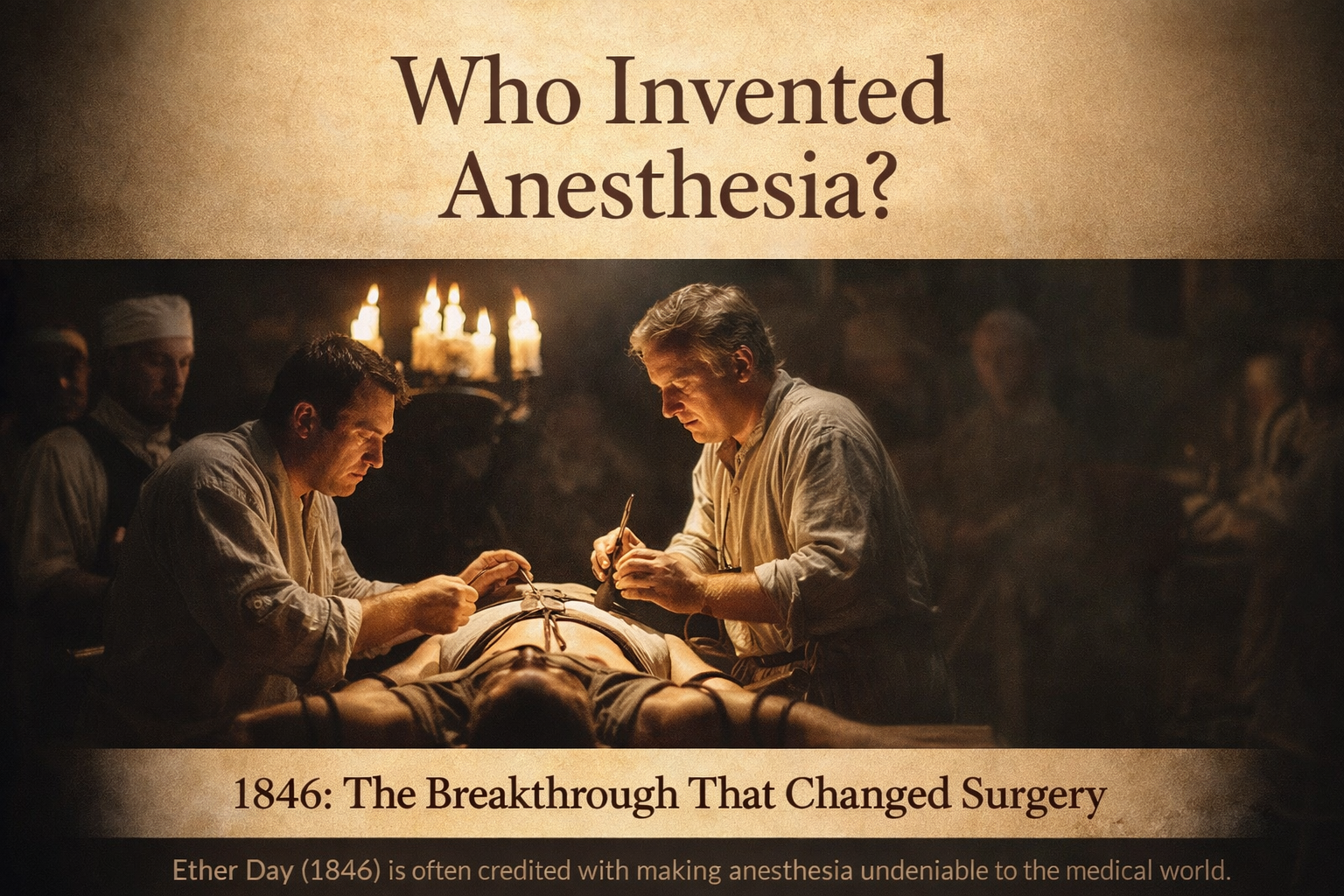
Who invented anesthesia: 1846 Ether Day demonstration at Massachusetts General Hospital that changed surgery
1) Horace Wells and Laughing Gas
In 1844, Connecticut dentist Horace Wells realized that nitrous oxide could reduce—or even eliminate—pain during tooth extraction. He famously tested the idea on himself, then began using nitrous oxide in practice.
But when Wells tried to prove it in a public medical setting, things went sideways.
The turning point: Wells attempted a public demonstration in Boston. The patient reacted, the audience mocked it as a failure, and Wells’ reputation took a serious hit.
2) William Morton, Ether, and the “No Humbug” Moment
Another dentist, William T. G. Morton, pursued a different approach: ether. Ether could produce a deeper, more dependable level of unconsciousness than nitrous oxide in many cases.
On October 16, 1846, Morton publicly demonstrated ether anesthesia during a surgery at Massachusetts General Hospital in Boston—an event now remembered as “Ether Day.” According to accounts, the surgeon concluded the event with the famous line: “Gentlemen, this is no humbug.”
If you’re looking for the moment anesthesia became undeniable to the medical world, this was it.
External reading (credible, fascinating):
- The Ether Dome (Mass General) – Russell Museum
- “Ether Day: an intriguing history” (free full-text article)
The Plot Twist: A Surgeon Used Ether Even Earlier
Here’s where it gets even more “Weird Dental Facts.” A physician named Crawford W. Long used ether successfully in surgery as early as 1842—years before the famous Boston demonstration. But because his work wasn’t widely published right away, the world didn’t immediately adopt it.
So who invented anesthesia depends on what you mean:
- First known surgical use of ether: Crawford W. Long (1842)
- First major public demonstration that convinced medicine: William T. G. Morton (1846)
- Early clinical use of nitrous oxide for painless dentistry: Horace Wells (1844)
Authoritative background:
History of Anesthesia – Wood Library-Museum (ASA’s museum)
Why Dentists Were at the Center of This Breakthrough
Here’s the part the general public rarely hears: dentists in the 1840s were dealing with extreme pain every day. Tooth extraction was common, direct, and unforgettable. That urgency pushed experimentation faster than most hospital surgery did at the time.
In other words, anesthesia didn’t only evolve because surgeons wanted it—anesthesia spread because dentists needed it.
What Anesthesia Made Possible (And Why It Still Matters)
It’s hard to exaggerate what anesthesia unlocked. Without the ability to control pain reliably, there would be no modern surgical world as we know it:
- joint replacements
- C-sections
- complex cancer surgeries
- organ transplants
- delicate reconstructive procedures
One discovery didn’t just make surgery easier—it made it human.
FAQ
Was anesthesia invented by a dentist?
Dentists played a central role in anesthesia’s early development. Horace Wells pioneered nitrous oxide for painless dentistry, and William Morton’s ether demonstration helped convince the medical world to adopt anesthesia broadly.
What happened on Ether Day?
On October 16, 1846, ether was publicly demonstrated at Massachusetts General Hospital in Boston as a way to prevent pain during surgery—an event widely regarded as the turning point for modern anesthesia.
So who gets the credit?
Many historians divide credit by contribution: Wells for nitrous oxide, Morton for the convincing public ether demonstration, and Long for earlier surgical ether use.
More Weird Dental Facts You’ll Actually Want to Read
Reader challenge: If you lived in 1840, would you agree to surgery knowing you’d feel everything? Share this with someone who thinks modern medicine has “always been like this.”
Disclaimer: This article is for educational purposes and is not medical advice.