Vitamin D3 and K2 benefits are often discussed together—but why? If vitamin D helps your body absorb calcium, why do so many experts recommend taking it with vitamin K2?
It’s a question that comes up often—and the answer has to do with how your body uses calcium after it’s absorbed. While vitamin D3 increases calcium levels in the bloodstream, vitamin K2 helps direct that calcium to the places where it’s actually needed—like your bones and teeth.
Understanding how these two nutrients work together can help you make more informed decisions about your health. Many of the most talked-about vitamin D3 and K2 benefits relate to how the body absorbs, transports, and uses calcium over time.
What Does Vitamin D3 Do?
Vitamin D3 (cholecalciferol) plays a key role in helping your body absorb calcium from the foods you eat. Without enough vitamin D, your body cannot efficiently take in calcium, even if your diet contains plenty of it.
Once absorbed, calcium enters the bloodstream, where it becomes available for use throughout the body.
This is why vitamin D is often associated with:
- Bone health
- Immune support
- Muscle function
However, increasing calcium absorption is only part of the story.
What Does Vitamin K2 Do?
Vitamin K2 plays a different—but equally important—role. It helps activate proteins that regulate where calcium goes in the body.
Two key proteins include:
- Osteocalcin – helps bind calcium into bone
- Matrix Gla Protein (MGP) – helps prevent calcium from accumulating in arteries and soft tissues
In simple terms, vitamin K2 helps ensure that calcium is used appropriately rather than deposited in places where it doesn’t belong.
Why Vitamin D3 and K2 Are Often Taken Together
This is where the combination becomes important.
Vitamin D3 helps bring calcium into circulation. Vitamin K2 helps guide that calcium into bones and teeth while limiting deposition in soft tissues.
A helpful way to think about it:
- Vitamin D3 = brings calcium into the body
- Vitamin K2 = directs calcium to the right places
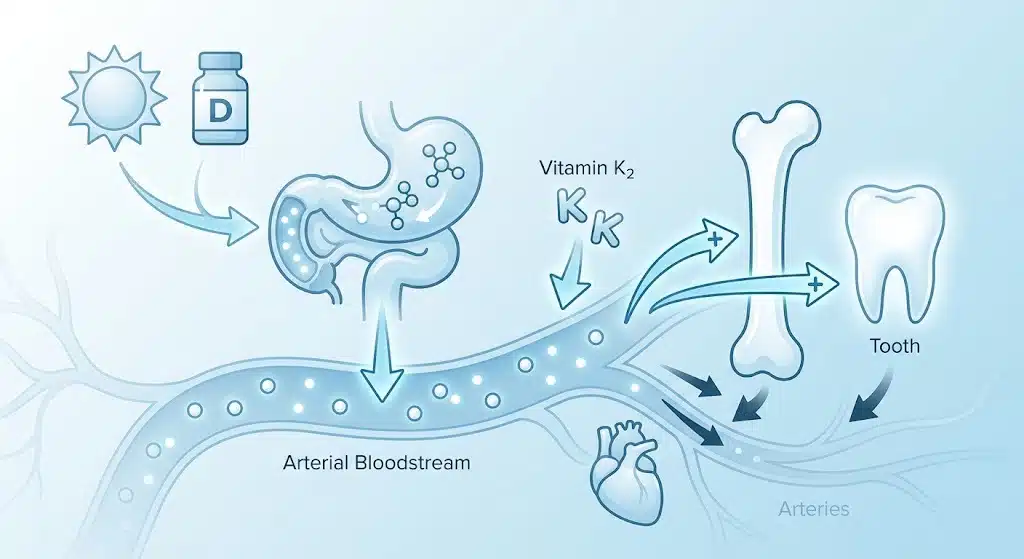
Vitamin D3 and K2 benefits include helping direct calcium into bones and teeth rather than soft tissues.
Because of this complementary relationship, many people choose to take both nutrients together as part of a balanced approach to bone and overall health. In fact, one reason people look into vitamin D3 and K2 benefits is the idea that these nutrients may work better together than alone.
What This Means for Your Teeth and Jawbone
From a dental perspective, this relationship is especially interesting.
Your teeth and jawbone rely on proper mineralization. Calcium plays a major role in this process, but it must be delivered and incorporated correctly.
Vitamin D3 helps ensure calcium is available, while vitamin K2 supports the biological processes that help integrate that calcium into hard tissues.
This concept aligns with observations made by Dr. Weston A. Price, who noted that traditional diets rich in fat-soluble vitamins—including vitamins A, D, and K2—were associated with strong teeth and lower rates of dental decay.
If you’re interested in how nutrition may influence oral health, you may also want to read this related article: Cod Liver Oil for Teeth: Does It Really Help?
Do You Need to Take Both?
Not everyone needs to supplement with both vitamin D3 and K2. Many people can obtain these nutrients through a well-balanced diet and adequate sun exposure.
However, supplementation is common—especially for vitamin D—due to modern indoor lifestyles and limited sun exposure.
When vitamin D is taken in higher amounts, some practitioners suggest pairing it with vitamin K2 to support balanced calcium utilization.
That said, this is not an all-or-nothing issue. For most people taking standard doses, vitamin D alone is generally considered safe.
Food Sources and Supplement Options
Vitamin D3 can be obtained from:
- Sunlight exposure
- Fatty fish
- Cod liver oil
Vitamin K2 is found in:
- Fermented foods (such as natto)
- Certain cheeses
- Grass-fed animal products
Some people choose to supplement with both nutrients for convenience. For example, fermented cod liver oil and butter oil combinations provide naturally occurring fat-soluble vitamins in a traditional food-based form.
If you’d like to explore one option, you can learn more here: Green Pasture Fermented Cod Liver Oil + Butter Oil Blend
Common Questions About Vitamin D and Oral Health
Is vitamin D3 good for your teeth?
Vitamin D3 helps your body absorb calcium, which is essential for maintaining strong teeth and supporting enamel integrity. Low levels may increase the risk of decay and gum problems.
Can vitamin D deficiency cause dental problems?
Yes. Low vitamin D levels have been associated with increased risk of cavities, gum inflammation, and slower healing after dental procedures.
What is the role of vitamin K2 in dental health?
Vitamin K2 helps direct calcium into bones and teeth rather than soft tissues, supporting proper mineralization when combined with vitamin D.
Final Thoughts on Vitamin D3 and K2 Benefits
Vitamin D3 and K2 benefits come down to how your body manages calcium.
Vitamin D3 helps increase calcium availability, while vitamin K2 supports proper distribution—particularly into bones and teeth.
Together, they form a complementary system that reflects how the body naturally manages mineral balance.
While supplementation may not be necessary for everyone, understanding how these nutrients work can help you make more informed decisions about your health.