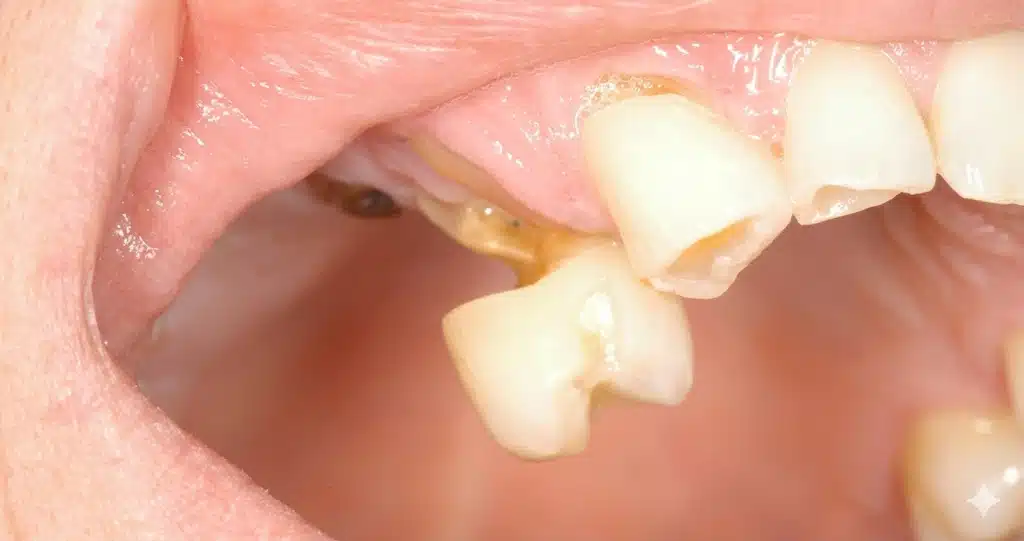
For years, both dentists and patients have blamed toothbrush abrasion for those small notches that sometimes appear at the gumline. It seems logical—brush too hard, wear away the tooth. Simple.
But clinical experience and research have gradually told a different story. And once you see it, you can’t unsee it.
Those notches—often called abfractions—are far more likely to be caused by stress from clenching and grinding than by your toothbrush. (See related: Understanding Tooth Clenching and Grinding)
Rethinking Toothbrush Abrasion and Gumline Wear
The traditional explanation was straightforward: aggressive brushing, especially with a hard toothbrush, scrubs away enamel near the gumline. Many patients still believe this—and to be fair, it’s not entirely wrong.
Toothbrush abrasion can affect teeth. But what it tends to do is dull and roughen the surface, not carve out the sharply defined notches we often see in practice.
That distinction matters.
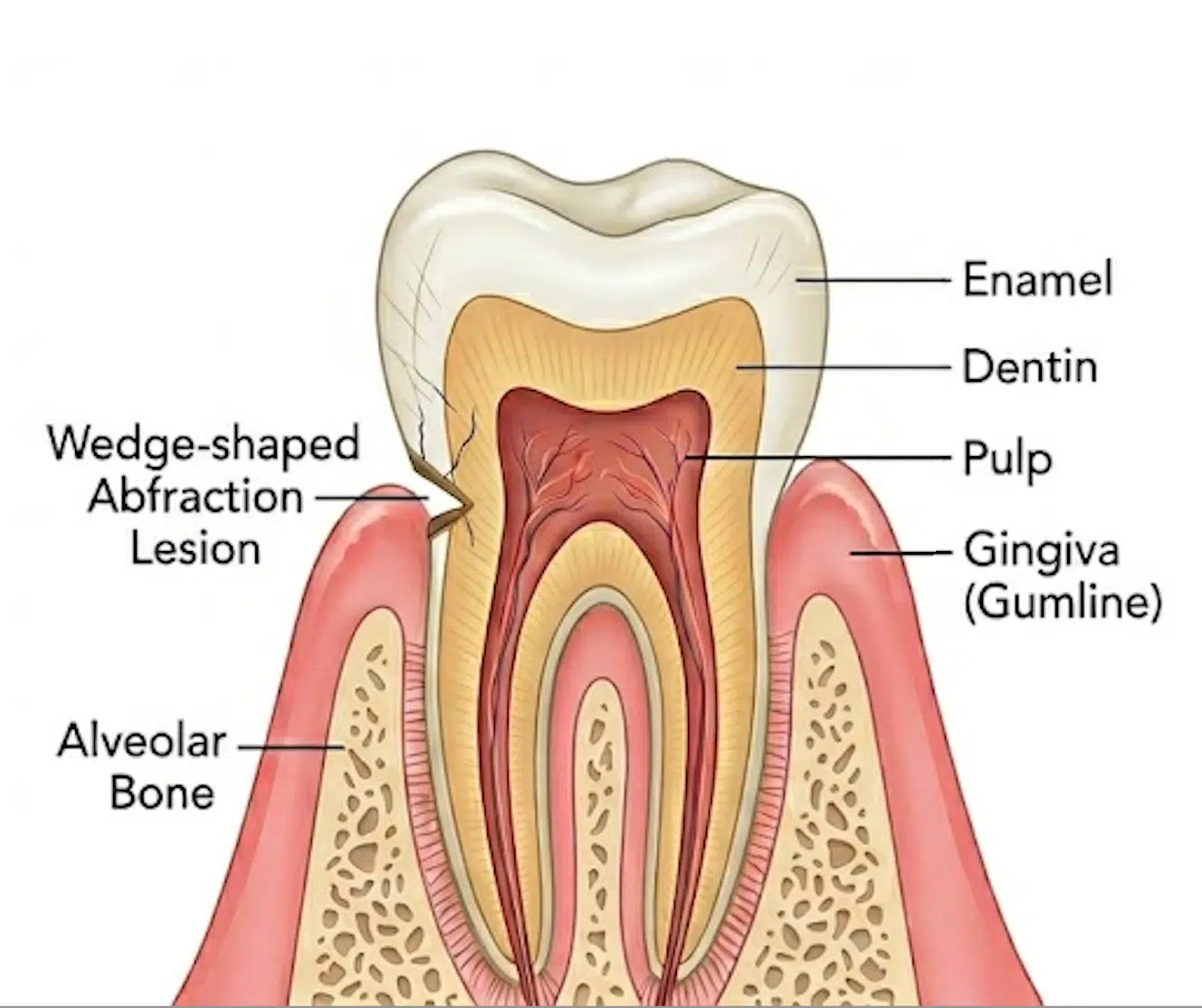
What Actually Causes These Notches?
Modern understanding points strongly toward mechanical stress—specifically, the forces generated during clenching and grinding.
Teeth are not perfectly rigid structures. Under repeated load, they flex—especially near the gumline, where enamel is naturally thinner.
Over time, this flexing concentrates stress at that vulnerable area. Eventually, microscopic breakdown occurs in the enamel structure, leading to the wedge-shaped defects we recognize as abfractions.
For a broader clinical overview of these lesions, see this summary from PubMed/NIH on non-carious cervical lesions.
An Early Clue from Anthropology
Decades ago, an anthropological study examined ancient skulls—long before toothbrushes existed. Researchers observed similar cervical lesions in individuals who clearly never brushed their teeth.
What they did have, however, were signs of heavy occlusal wear and, in many cases, malocclusion.
Even then, the implication was clear: something other than brushing was at work.
Early theories explored mechanisms like piezoelectric effects in enamel. While those ideas have evolved, the core observation still holds—mechanical stress plays a central role.
Why Hard Toothbrushes Still Aren’t Recommended
So if toothbrush abrasion isn’t the main cause of these notches, does that mean brush choice doesn’t matter?
Not at all.
Hard toothbrushes can still damage your teeth and gums—just in a different way.
One important and often overlooked factor is how the bristles are finished.
- Soft bristles are typically end-rounded, meaning the tips are polished to be smooth and gentle.
- Hard bristles are often cut more bluntly or at angles, leaving sharper edges.
According to the American Dental Association’s toothbrush guidelines, soft-bristled brushes are recommended for most patients.
Those sharper edges can:
- Scratch enamel surfaces
- Contribute to gum irritation or recession
- Remove the natural luster of teeth over time
What they generally don’t do is create the deep, wedge-shaped notches associated with abfractions.
Why This Misconception Still Persists
The confusion is understandable.
The location fits the story—damage near the gumline must be from brushing, right?
But dentistry often requires us to look beyond what seems obvious. The mouth is a dynamic system, and forces generated during function (and dysfunction) can have effects that aren’t immediately intuitive.
Clenching, grinding, and bite imbalance can quietly shape tooth structure over years—often without the patient realizing it.
What This Means for You
If you notice notches forming near your gumline, it’s worth looking beyond your brushing habits.
Yes, use a soft toothbrush and a gentle technique. (You may also find this helpful: Why Upgrading Your Toothbrush May Help)
But it’s equally important to consider:
- Clenching or grinding habits (especially at night)
- Bite alignment and occlusal forces
- Stress-related muscle tension
In many cases, addressing those underlying forces is the key to preventing further damage.
Final Thoughts on Toothbrush Abrasion
Toothbrush abrasion is real—but it’s often been blamed for something it doesn’t primarily cause.
The notches we see at the gumline are more accurately a story of stress, flexure, and time.
Understanding that shift doesn’t just correct a misconception—it opens the door to better prevention, more accurate diagnosis, and ultimately, healthier teeth.
Frequently Asked Questions About Toothbrush Abrasion and Gumline Notches
Can brushing too hard cause gumline notches?
It’s a common belief, but brushing too hard is not the primary cause of the wedge-shaped notches seen at the gumline. While toothbrush abrasion can wear down tooth surfaces and irritate gums, these deeper notches are more strongly linked to stress from clenching and grinding.
What is the difference between abrasion and abfraction?
Abrasion refers to mechanical wear caused by external factors like brushing. Abfraction, on the other hand, is thought to result from internal stress forces that cause the tooth to flex, leading to breakdown at the gumline. They can look similar but have very different underlying causes.
Should I stop worrying about toothbrush abrasion?
Not entirely. Toothbrush abrasion can still affect the surface of your teeth and contribute to gum irritation or recession. Using a soft-bristled toothbrush and gentle technique remains important for long-term oral health.
Why do dentists recommend soft toothbrushes?
Soft toothbrushes are designed with end-rounded bristles, which are smoother and less likely to scratch enamel or irritate gums. Hard bristles are often cut more sharply, which can create micro-scratches and contribute to surface wear over time.
How can I tell if I’m grinding or clenching my teeth?
Common signs include jaw soreness, headaches, worn or flattened teeth, and sometimes sensitivity near the gumline. Many people grind at night without realizing it, so a dental exam is often the best way to identify it.
Can these gumline notches be treated or reversed?
Once the structure is lost, it doesn’t grow back on its own. However, your dentist may recommend bonding or other restorative options if the area becomes sensitive or continues to worsen. Just as important is addressing the underlying cause to prevent progression.
What’s the most important takeaway about toothbrush abrasion?
Toothbrush abrasion is only part of the picture. If you’re seeing notches at the gumline, it’s worth looking beyond brushing habits and considering the role of bite forces and long-term mechanical stress.