Introduction
Welcome to the ultimate showdown: tooth abscess vs cyst.
It may not be the latest Marvel release, but the plot twists in your mouth can be just as dramatic.
If you’ve felt a sharp twinge when you bite, spotted a puffy spot on the gum, or noticed a slow-growing bump on an X-ray,
you may be wondering whether you’re dealing with a true infection-driven abscess or a
dental cyst.
Spoiler: they’re not the same thing—yet they can look similar from the outside.
In this post, I’ll break down what each condition is, why it happens, how it’s diagnosed, and what treatment usually looks like.
Think Batman vs. Superman: both powerful but with different missions. The same goes for abscesses and cysts—both occupy space, both can threaten surrounding structures,
but their causes and ideal treatment paths diverge in important ways.
A cyst is a fluid-filled sac that can form in bone or soft tissue.
One is primarily about bacteria; the other is about pathologic tissue growth.
Telling them apart matters because the treatment differs.
Abscesses often announce themselves with pain, swelling, and tenderness—sometimes fever.
Cysts, on the other hand, can be stealthy for a long time.
They may quietly expand, thinning bone or nudging teeth until they’re big enough to be noticed on a routine X-ray.
Both can be serious if ignored.
Understanding Tooth Abscesses
What a Tooth Abscess Is (and Isn’t)
A tooth abscess is an infection that your body walls off as a pocket of pus.
Bacteria invade the pulp (the living core of the tooth) through deep decay, a crack, or trauma.
When pulp tissue dies or becomes infected, pressure builds and inflammation ramps up.
The infection seeks a path of least resistance—often through the root tip or along the gum.
A periapical (dental) abscess starts inside the tooth and exits near the root tip after bacteria reach the pulp.
A periodontal abscess starts in the gum and supporting bone around a tooth—usually from deep periodontal pockets or trapped debris.
Treatment focuses on the source: root canal therapy for a periapical abscess; periodontal therapy (and sometimes surgery) for a periodontal abscess.
Common Causes
- Untreated cavities: Deep decay opens a highway for bacteria to reach the pulp.
- Cracks or fractures: Even hairline cracks can allow bacteria in.
- Trauma: A blow to a tooth may damage pulp tissue and set the stage for infection.
- Failed or incomplete prior treatment: If bacteria persist after a procedure, infection can re-emerge.
- Advanced gum disease: Deep pockets can become walled-off infection sites.
Symptoms You Might Notice
- Throbbing pain that can radiate to the jaw, ear, or temple; often worse with chewing or heat.
- Swelling in the gum or face; sometimes a visible “pimple” (fistula) on the gum that drains.
- Tenderness to bite or pressure; the tooth may feel “taller” than neighbors.
- Pus drainage and a bad taste or odor.
- Fever / malaise in moderate to advanced infections.
How Dentists Diagnose Abscesses
- Percussion and palpation: Tapping and pressing help gauge inflammation.
- Pulp vitality testing: Cold tests assess nerve response.
- Periodontal probing: Looks for deep pockets or isolated defects suggesting a periodontal abscess.
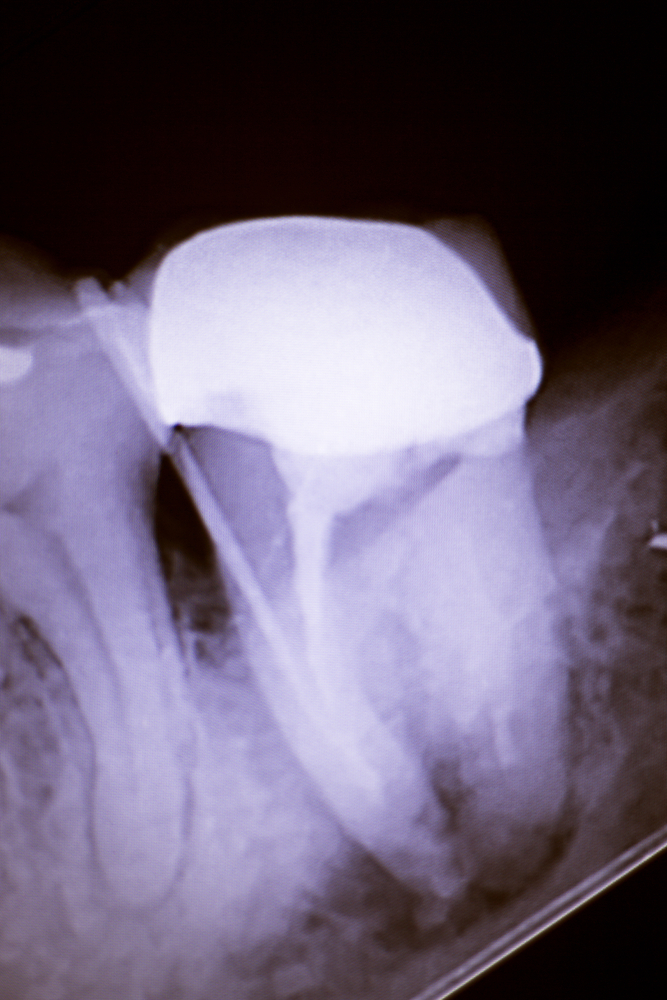
- X-rays / CBCT: Reveal radiolucency, widened ligament space, or bone loss patterns.
A periapical abscess calls for root canal therapy; a periodontal abscess calls for periodontal debridement and drainage.
Treating one when you actually have the other can delay healing.
Treatment Options
- Drainage: Opening the tooth or gum pocket to release pressure and pus.
- Root canal therapy: Cleans and seals the canal system when infection originates inside the tooth.
- Periodontal therapy: Debridement, irrigation, and sometimes surgery for gum-based abscesses.
- Extraction: When the tooth cannot be saved.
- Antibiotics: Used only when systemic signs like fever or swelling are present—never as the sole fix.
If pain or swelling escalates—or you develop fever—see your dentist promptly.
Understanding Dental Cysts
What a Dental Cyst Is
A dental cyst is a pathologic, fluid-filled sac lined by epithelium that forms in the jaws or soft tissue.
Some cysts are tied to tooth development (odontogenic); others arise after chronic irritation or from remnants of dental tissues.
Unchecked expansion can thin bone, shift teeth, or encroach on nerves or sinuses.
Common Types
- Radicular cysts: Associated with non-vital teeth after long-standing infection.
- Dentigerous cysts: Form around unerupted teeth, often wisdom teeth or canines.
- Eruption cysts: Seen in children; usually self-limiting.
- Odontogenic keratocysts: Notorious for recurrence, requiring careful follow-up.
Why Cysts Form
- Post-infection stimulation: Chronic inflammation can trigger cyst formation.
- Developmental factors: Disturbances in tooth development may leave remnants that form cysts.
- Impacted teeth: Pressure and follicular fluid buildup contribute to dentigerous cysts.
- Genetic or syndromic conditions: Certain disorders predispose patients to multiple cysts.
Symptoms
- Often painless until large.
- Jaw swelling or fullness.
- Shifting or loosening teeth.
- Numbness if nerves are compressed.
- Pain or drainage if secondarily infected.
Diagnosis and Treatment
- X-rays / CBCT: Define size, location, and relationship to teeth or sinuses.
- Vitality testing: Distinguishes cysts tied to dead teeth from other lesions.
- Biopsy or aspiration: Confirms diagnosis and rules out other pathology.
Follow-up imaging ensures full healing and detects recurrence.
Abscess vs Cyst: The Key Differences
Ignoring proper diagnosis is like trying to guess what’s in a mystery box—you might end up with something you didn’t expect!
| Feature | Tooth Abscess | Dental Cyst |
|---|---|---|
| Cause | Bacterial infection of pulp or gum | Pathologic fluid-filled sac |
| Pain | Common, often throbbing | Minimal until large |
| Onset | Acute or acute-on-chronic | Slow, progressive |
| Exam clues | Tenderness, swelling, pus | Expansion, tooth shift |
| Imaging | Periapical radiolucency | Well-defined radiolucency |
| Primary treatment | Drainage + root canal / periodontal therapy | Surgical removal or decompression |
Cysts are lesions that need removal or decompression.
They can look similar on the surface—exam and imaging are essential.
When to See a Dentist
Red Flags
- Severe or escalating pain
- Swelling in face or gums
- Pus discharge or foul taste
- Fever or malaise
- Difficulty swallowing or breathing
- Numbness or shifting teeth
Don’t wait until a minor issue becomes a major one.
Prevention: Lowering Your Risk
Practical Habits
- Brush twice daily with gentle technique.
- Floss or use interdental cleaners every day.
- Rinse with antimicrobial mouthwash if prone to inflammation.
- Limit sugary snacks and drinks.
- Stay hydrated to maintain saliva flow.
- Avoid smoking or chewing tobacco.
Dental Visits
- Catch silent problems early with X-rays.
- Spot periodontal pockets before infection sets in.
- Professional cleanings reduce hidden bacterial load.
- Personalized prevention plans prevent escalation.
Regular check-ups pay off.
FAQs
Can a cyst turn into an abscess?
A cyst can become secondarily infected and act like an abscess, but the processes differ.
Both the infection and the cyst itself need to be addressed.
Do abscesses always need antibiotics?
Not always. The cornerstone is source control—drainage and, if periapical, root canal therapy.
Antibiotics are for systemic signs such as fever or spreading cellulitis.
What if my tooth doesn’t hurt but an X-ray shows a dark area?
That could be a chronic periapical lesion or cyst.
Your dentist will test the tooth, review imaging, and decide whether endodontic treatment or surgical removal is best.
Can home care fix an abscess?
No. Salt-water rinses may soothe tissues, but an abscess requires professional intervention.
Conclusion
Abscesses and cysts can look alike but behave very differently.
Abscesses signal infection that needs elimination; cysts signal a lesion that needs removal or monitoring.
Recognizing the difference—and acting early—protects your comfort, your teeth, and your jaw.
If something feels off—pain, swelling, a gum bump, or an odd X-ray—get it evaluated.
You’ll save time, money, and stress by treating the real cause sooner rather than later.
For more quirky-but-useful reading, visit the
Weird Dental Facts section.
For wellness support that complements oral health, explore
ToothWiz Vitamins.
Additional Resources and References
- American Dental Association – Tooth Abscess
- WebMD – Dental Cysts
- National Institutes of Health – Understanding Dental Infections
Regular check-ups can help catch these problems early!