When we are born we come into the world without teeth. Some of us leave the same way, but that really isn’t what nature intended.
When you are on a liquid diet having teeth doesn’t appear to be vital, since there is obviously nothing to chew. Nature pretty much handles a baby’s nutritional needs with mother’s milk. As we grow and begin to eat solid food, however, having and maintaining healthy teeth becomes an entirely different matter.
So when teeth become lost due to cavities, periodontal disease or trauma, the consequences for good health can become significant. Let’s not forget that digestion begins in the mouth. There are actually two forms of digestion – mechanical and chemical.
Mechanical digestion is the grinding and tearing of food, as in chewing, in order to increase its surface area. Creating a greater surface area means that there is a better chance that chemical digestion can do its job. In chemical digestion, enzymes react with the food to help break it down into simpler substances which can either be absorbed in the bloodstream as nutrients or passed out of the body as waste. This process of breakdown and assimilation occurs within the digestive tract – but it starts in the mouth with your teeth, tongue, and saliva.
Because a full set of adult teeth numbers thirty-two, it seems many people feel the occasional loss of a tooth is a relatively insignificant event. And while it is true that a person can still function with thirty-one, the long-term consequence of losing just one tooth can be more significant than most people realize.
While all of our teeth are important, structurally, the loss of certain teeth will bring about more change than the loss of others. Think of this in terms of the walls of your house. If you take down a non-supporting wall, the house will still stand. Take out a supporting wall, however, and you have a much bigger problem. Teeth are constructed much like an arch, though. If you have ever seen a stone arch, you know it has a keystone at the top that keeps the arch together. Remove that one stone, and the whole thing collapses. In your dental arch, you can think of your canines as a keystone. Lose them, and the ensuing change can be rapid. You can lose several teeth – even all – over time. But it’s not just the loss of canines that creates a problem.
Losing a first molar, for example, can create a domino effect of changes in your mouth that can affect your ability to chew easily. It can cause shifting of the teeth in a manner that even affects the appearance of your front teeth. Or, it can lead to periodontal problems and the formation of cavities on portions of the teeth that might not have been otherwise affected before the loss.
The point is that if you lose a tooth, you should consult your dentist about what tooth replacement options are right for you. Today, we have many ways of providing functional replacements that can improve your ability to chew your food, maintain your good appearance, and keep you from losing still more teeth. Depending upon your circumstances and financial considerations, these replacements may include removable dentures, bridges (which are non-removable, cemented tooth replacements), or dental implants (think of them as artificial tooth-roots that have crowns, bridges, or dentures attached to them).
If you are missing a tooth, speak with your dentist about what tooth replacement options are right for your situation. Replacing a lost tooth early is often much less involved (and costly) than when you begin to experience the problems resulting from long-term neglect.
My guess is that it is either because you are compelled to do so by law, or (if you live in the U.S.) you believe the National Highway Traffic Safety Administration (NHTSA), who claim that seat belts save about 13,000 lives a year, nationwide.
The few seconds it takes you to snap on your seat belt buckle reduces the chance of dying in a car crash by 45%, and of being injured by about half. Nevertheless, seat belts are not likely to play a big role in saving your life, because chances are you won’t find yourself in a serious automobile accident. Let’s face it, fortunately, most people never find themselves in that circumstance.
On the other hand, gum disease (either gingivitis or periodontal disease) affects up to 80 percent of the population.
In other articles, you may have heard that periodontal disease is the leading cause of tooth loss among adults. The shocking reality is that this is probably the least notable consequence of periodontal disease.
Periodontal disease is a significant risk factor for stroke, heart disease, certain respiratory problems, low birth-weight infants, and some forms of cancer.
While very few people will die in a car crash, a great deal more will die from a heart attack, stroke, or cancer. Addressing periodontal disease via preventive techniques can significantly reduce your chances of dying from any one of these afflictions.
If this simple logic is not enough to convince you of the need to brush after meals, floss daily and eat a healthy diet, it may help you to know that over the past few decades, there have been hundreds of peer-reviewed medical studies published in journals showing periodontal disease to be a risk factor for heart attacks.
While periodontal disease is certainly not the only factor in the occurrence of cardiovascular diseases or cancer, there is definitely a link. The modern thinking regarding the connection has to do with the long-term inflammatory nature of gum disease. In simple terms, periodontal disease is a bacterial infection of the gums and bone supporting the teeth. As with most any infection in the body, this leads to inflammation.
Often having no symptoms that are detectable by the patient, bacteria from periodontal disease can affect blood vessels on the walls of your heart. If you have gum disease, the bacteria can easily invade the blood stream through one of many open portals. Let’s face it, it is a relatively short trip from the mouth to the heart after all.
Bacteria in the blood may also stimulate liver production of C-reactive proteins and fibrinogen. Both these substances have been linked to heart attacks.
Persons who successfully treated their periodontal disease have also been shown to experience improved cholesterol levels and demonstrated lowered blood pressure. Most readers will recognize these as factors frequently associated with cardiovascular disease.
The bottom line: while we generally don’t hesitate to snap on a seat belt because it may save our lives, not enough of the population understand that oral health basics save more lives than buckling-up! Added benefits? Saving teeth (which leads to better digestion and less need for heartburn medications), fresher breath, and avoiding painful toothaches or complicated dental procedures — which also translates to more dollars in your pocket.
In an ideal world we wouldn’t get cavities, have gum problems, or ever lose a tooth. Perhaps, the world might not be ideal, even then, but at least we wouldn’t have those problems.
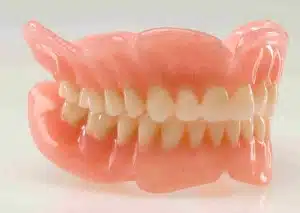
Unfortunately, it is a fact of life that many people do lose their teeth – either to tooth decay or periodontal disease – and then require tooth replacements. Despite the growing popularity and acceptance of dental implants as prosthetic tooth substitutes, removable dentures still constitute the most common solution to missing teeth.
If a person still has some natural teeth, they may get what we term a “removable partial denture.” If they have lost all of their teeth, typically they will get a full denture. A commonly observed problem, however, is that once the dentures are made, patients tend to wear them far beyond the point where the denture continues to function well. A little background regarding the problem with dentures may help clarify why this is so:
Some people think that if they get rid of all of their teeth and get dentures they will finally see an end to their dental problems. This is far from reality. Actually, what happens is that patients simply trade one set of dental problems for another. While many patients will tell you that they eat just fine with their dentures, it has probably been so long since they had their real teeth, they have forgotten what it is like to eat normally.
What are some of the disadvantages of wearing dentures?
You lose up to 50% of your biting force.
A full upper denture covers your palate and interferes with your ability to taste your food.
Dentures can move when you eat, speak, cough, or sneeze.
Food accumulates around your dentures after a meal.
Sore spots can develop when the hard denture rubs against your gums.
Patients with an active gag reflex may not be able to even wear a denture without feeling as though they will gag.
Multiple relines of the denture may be required as the shape of your mouth changes. This can happen as a result of gaining or losing weight, or as a result of bone shrinkage and aging.
Atrophy of the upper or lower jaws can make it impossible to develop suction with the denture.
How long do they last?
This is an interesting question, because it is not unusual to encounter patients who tell you their denture was made twenty or even thirty years ago. Believe me, at that point, they are seldom good-looking dentures! But it underscores something about denture wear that is not well understood.
Once a denture is made and, assuming it fits well at the time of delivery, most patients expect – and can experience – good retention and stability.
But the key point is – once made – the dentures don’t change. Yet your mouth can – and often does. New medications can also cause your mouth to become dry, leading to irritation and sore spots. Osteoporosis could lead to shrinkage of the jaw. Despite these changes, many patients attempt to make up for new problems with denture adhesives. Unfortunately, this can open the door to even more irritation, and denture creams containing zinc have even been linked to other health problems such as numbness, tingling and muscle weakness.
While relines can assist with these changes and correct the fit of your denture to improve retention, many patients would do well to consider re-making their dentures after about five years to seven years. In my experience, waiting too long beyond that time period can make the transition to a new denture more difficult.
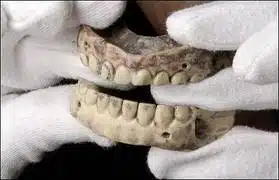
200 Year-Old Denture
When the change is minimal, such as one might expect after about five years, the transition is generally quite easy. It also helps to have a spare denture for those “oops!” moments. Over the years, I have experienced patients dropping dentures into the sink while cleaning them, accidentally dropping them into garbage disposals, having dogs and cats chew them, and more. Patients will bite into hard objects and break a tooth, they take them out at night and sometimes sit on them, they get stepped on – and one, believe it or not, was even stolen! That was simply too strange a story to recount here.
If your denture is over five years old, talk to your dentist about whether it is time to reline or remake your denture. You will be glad you did.
“If it ain’t broke, don’t fix it.” Isn’t that how the saying goes?
Well, when it comes to teeth, most people really can’t tell if it’s broken.
Consider these interesting dental tidbits:
Periodontal (gum) disease is the number one cause of tooth loss world-wide. That’s basically a condition in which you lose the bone that surrounds your teeth, so that even healthy teeth may fall out.
Most people who get cavities diagnosed by their dentist didn’t have any idea that they even had a cavity.
A substantial number of patients who clench or grind their teeth — resulting in worn-out, chipped, and cracked teeth — swear that they don’t.
Some patients who come into a dental office convinced that they have a cavity because of pain, actually don’t have a cavity at all.
What the heck?! Yeah, it can get a little confusing, and that’s probably why at one point or another many people find themselves confronting a dental emergency. Some emergencies are simply the result of accidents. After nearly twenty years of practice, I have seen quite a lot of these too. But in reality, the vast majority of dental emergencies are simply caused by neglect. So here are a few tips on how to stay out of trouble:
1. Never open anything with your teeth. Just don’t do it. I have restored countless teeth after people tried to open or hold objects with their teeth. It’s not worth it. Grab a scissor, pliers, bottle-opener or whatever you need to do the job. Your teeth were made to chew your food.
2. Use an athletic mouth guard if you play sports. Sports are fun and can be great exercise. They can also cause teeth to get punched out, kicked out or knocked out. Use a professionally made mouth guard if you play sports.
3. See your dentist regularly. Some things can even be tough for your dentist to detect. Unless you have x-ray vision and can see inside your own head, you will never know if you have decay between your teeth until it is so large that it starts to look ugly or pieces of the tooth actually fall apart. Also, you don’t want your first realization that you have periodontal disease to come from noticing that your teeth are loose. Your dentist should also be checking for oral cancer at your examination visits. If you have it, early diagnosis can be a matter of life or death.
4. Brush and floss your teeth daily. There is simply no substitute for prevention. Brushing your teeth after every meal and flossing at least once a day goes a long way in protecting you from oral diseases — not to mention bad breath.
5. Wear a custom night guard if you grind or clench your teeth. Bruxism — the term used for the grinding or clenching of teeth, has been observed by dentists to be increasing in frequency among their patient populations. No doubt, stress has a great deal to do with this, but if you have been diagnosed with bruxism don’t take it lightly — because your teeth won’t either. I have also noticed a significant rise in bruxism over the last 10 or so years and its effects can be devastating.
Oh, and that emergency dentist you were thinking of using. You know, you saw the billboard on the way to work. He’s the one that is willing to see you 24/7. So, in the worst case scenario, you will have someone to go to, right?
I wonder how many people he has actually treated at 3:00 AM? If it happens at all, I’m certain it doesn’t happen often. Sure, you can CALL him 24/7, but you’ll be seen at the first opportunity. And if he does agree to see you after hours or on a weekend, it will likely cost you a few extra hundred in addition to the cost of your treatment. By the way, be prepared to bring cash, because he may not accept checks or a credit card from a brand-new emergency patient.
The moral of the story is simple. Use common sense and just don’t let things get that far along. If it has been more than six months since you have seen your dentist (unless you have full dentures) you are over-due. Even patients with dentures should see their dentist at least once a year to check the fit of their dentures, be evaluated for adjustments or relines, to have the dentures cleaned, and to check for oral cancer.
How long has it been since your last dental visit?
Here is an interesting exchange I had with a patient not too long ago. I’m getting ready to start a cleaning after completing my examination. His gums are red (he has gingivitis), there is plaque visible, and I just know those gums will bleed when I start to clean them. I’d like to help him get this under control, but I suspect he doesn’t floss, so I ask “Do you floss?”
His answer: “Whenever I need to.”
I’m thinking: “That would be, like, EVERY DAY.” But instead I ask: “How often is that?”
He replies: “Whenever food becomes noticeably stuck between my teeth.”
I’m actually detecting just a little annoyance now, and then he says: “Yeah, every dentist I have ever been to mentions the flossing thing.”
Well, I suppose I could talk about his favorite color, or maybe something equally inane, like the weather — but somehow the ‘flossing thing’ seemed appropriate. And then it occurred to me, maybe that IS “flossing” for this guy. And how many others, I wondered?
Therefore, in my quest to help rid the world of gingivitis and periodontal disease, (which just may be the shared goal of “every other dentist” who has recommended flossing) I’d like to clarify a few points about what it is and what it isn’t. While floss is unquestionably effective at removing food particles from between your teeth, just picking out the occasional chunk of steak from between your teeth doesn’t classify as “flossing.”
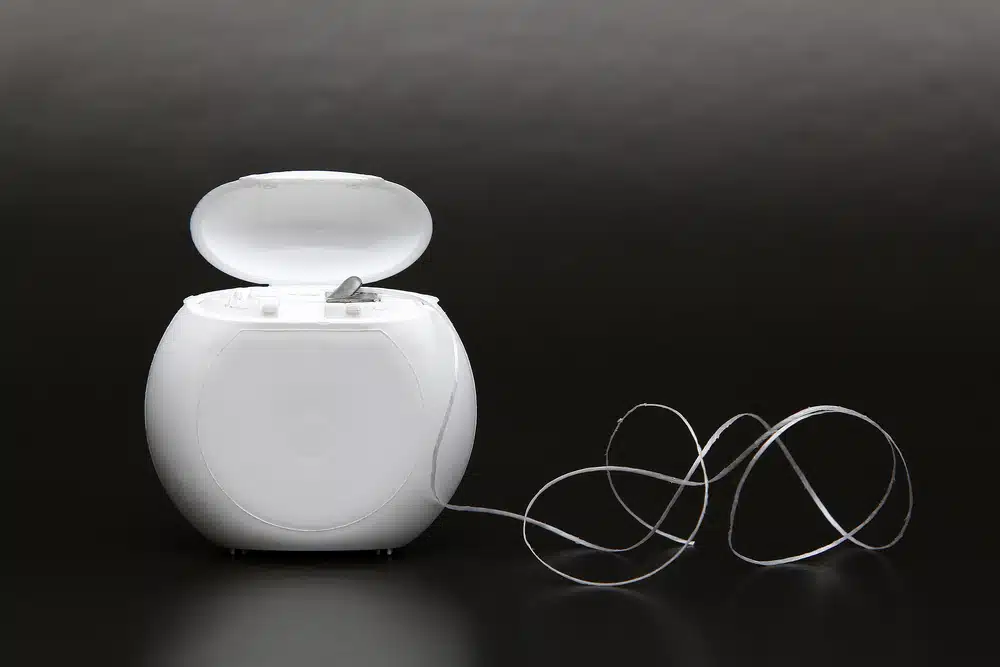
Flossing involves taking a piece of floss – say, about eighteen inches or so – grasping it between your thumb and index finger (just a few inches apart), then holding it in a “C” shape against the side of your tooth. Pre-threaded flossers are just fine in my opinion. Use whatever you are most comfortable with and whatever will get you to floss regularly. Rub the floss up and down the sides of every tooth. You actually want to slide the floss under the gum line. This cleans out areas your toothbrush cannot effectively reach.
Imagine not cleaning some parts of your teeth – ever. Or maybe, you just clean some teeth and not others. Do you think the unclean teeth might become more subject to tooth decay? If you answered “Yes!” then you would be right. This is exactly what occurs when you don’t floss. The parts of the teeth that are in contact with each other never get brushed. It’s not physically possible. So, a sizeable portion of all the fillings I end up having to place for patients are between the teeth. This is so easily helped . . . floss!
If you are just beginning to floss, you can expect your gums to bleed. Don’t let this ‘freak you out.’ A number of patients have said to me over the years “I tried flossing but it made my gums bleed, so I quit.” No. Bacteria, gingivitis, and nutritional deficiencies made your gums bleed. Flossing will help. You just need to stick with it until you notice less and less bleeding.
It is important to have your teeth and gums examined regularly. While gingivitis and periodontal disease are bad enough, there are a few even more serious conditions that could contribute to bleeding gums.
I actually could go on for quite a while about the many benefits to your overall health that flossing brings, but I’ll spare you for now. Or shall we just talk about the weather?
Dr. Richard Walicki is a dentist practicing general and cosmetic dentistry. While we hope you find the information contained herein interesting and useful, this blog is for informational purposes and is not intended to diagnose any oral disease. Dental conditions should be evaluated by your dental health professional or a qualified specialist.
Search by Topic
Get Access To The AWESOME Health Course
In this 12 week program, you’re going to discover how to achieve AWESOME health and double your energy with natural, tested, and scientific strategies. Just click on the image below:

 So when teeth become lost due to cavities, periodontal disease or trauma, the consequences for good health can become significant. Let’s not forget that digestion begins in the mouth. There are actually two forms of digestion – mechanical and chemical.