The Affordable Dentist

The Affordable Dentist

Let’s face it: seeing a doctor – any sort of doctor – can be expensive. And dentists are no exception. But if a person’s diet and home care have been lacking, the cost of dental treatment can quickly sky-rocket. One of the problems with dental care has to do with the fact that many patients still suffer from the idea that if they don’t feel anything wrong with their teeth, then all is well.Broken piggy bank

Unfortunately, when it comes to teeth, most people miss the boat entirely with this concept. The reason is simple: the outer part of the tooth – the enamel – is mostly mineral and has no nerves. That means you can have a cavity and not know it. Several, actually. Most dentists will attest to the fact that many patients are shocked to learn they have any cavities at all.

The trouble is that by the time a cavity actually gets big enough to pose a problem, it’s a PROBLEM. For most people that trouble is spelled P-A-I-N.

It’s really no small wonder that so many individuals associate going to the dentist with toothaches. For those patients, it is the only time they will actually make an appointment. They go because they now know they have a cavity. Pain is a huge motivator. . . .

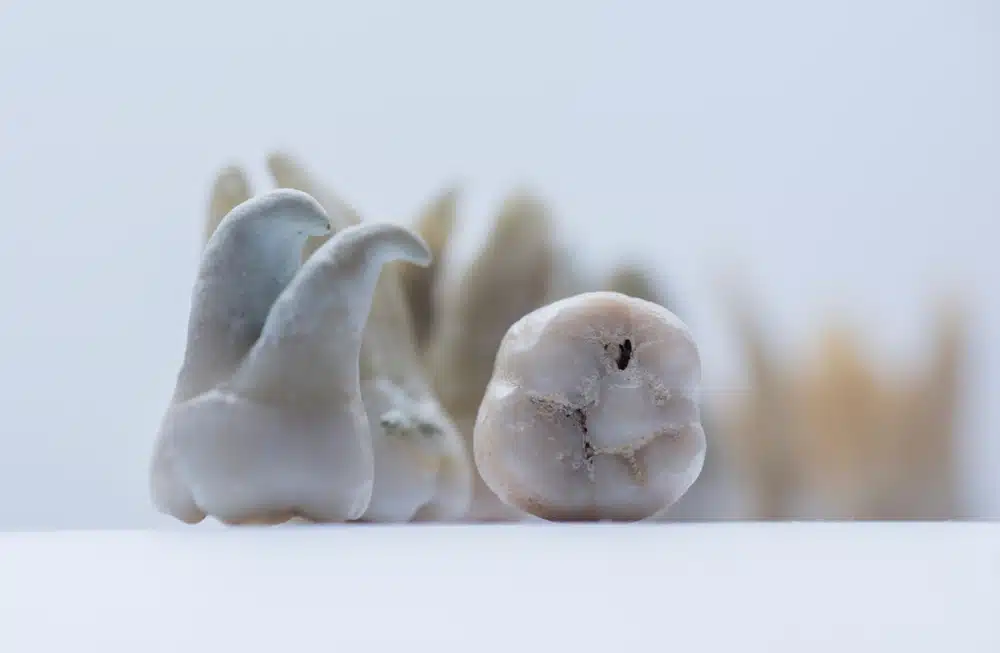
By the time a tooth hurts, though, the cavity is usually pretty close to the nerve. This means that if there is still enough tooth structure left to work with, the dentist may consider a root canal to remove the source of the pain – in other words – the nerve. Usually, this is not cheap. A root canal on a molar can cost over a thousand dollars when performed by a specialist. Then the patient has to go back to the dentist to have the tooth built up again (because so much tooth structure was lost to decay) and finally, the tooth may even need a crown. Lacking a blood supply and nerve thanks to the root canal, the tooth is now brittle and can break. Since your back teeth get a lot of pressure when you chew, failing to crown it may result in the tooth cracking and all that money you spent on the root canal goes out the window.Cracked Tooth

In a number of cases, because many people simply fear getting a root canal (not because they actually had one, but because they heard that a friend of a friend had a bad experience, and they never want to go through THAT), they opt to remove the tooth instead.

But now they have to replace the missing tooth or else their teeth will shift around and their bite goes awry. And fixing that new problem typically costs even more!

It can be frustrating.

Many people figure no one will see a missing back tooth, so why not pull it, since that is cheaper? At least they think so – until they notice their front teeth starting to form gaps, and find that food gets stuck all over the place whenever they eat. But then again, what if it’s a front tooth that needs to go?

You possibly think: “Wow, this is a problem, but I still really need to find something cheap.” OK, then. If you live in Philadelphia, you may Google “affordable Philadelphia dentist” or “cheap dentist.” A number of listings for dental implants appear, maybe some for “affordable cosmetic dentistry.” Wow, this isn’t sounding at all affordable!!! Wait! A couple of dental schools come up too. “Hmmm. Do I really want someone in their first year of dental clinic restoring my front tooth? It will be less expensive. But, then again . . . .”

Affordable DentistThe affordable dentist is someone who will understand your situation and can help you to find a workable solution for your circumstances. Many offices offer low-cost or interest-free programs that help you get the work you need today and then spread payments out over time. In some cases, it may be helpful to set up a lay-away program, especially if you have specific needs for which you have been given an estimate of treatment costs. In this manner you won’t end up spending your money on other less-essential items. Many offices will assess a minor fee to manage this plan, but it is usually quite small.

In the meantime, it is essential to keep yourself out of trouble with good preventive dental practices. Learn what diet has to do with your teeth and which home care habits are best. Remember, when it comes to teeth and gums, “no pain” most definitely does not always mean “no problems”.


Don’t Wait for Tooth Pain to See Your Dentist

Don’t Wait for Tooth Pain to See Your Dentist

Recently, I saw four new patients in my dental office during a given week. All four of those patients scheduled their visits because they perceived pieces of their tooth chipping away. In three out of four of those cases, the offending tooth was so badly decayed that the tooth couldn’t be saved. Yet only one of those patients came in with any discomfort.

The common thread in each of these cases is that the patient waited until the tooth was actually breaking apart to seek dental care. All too often, the trigger that brings people to the dentist is pain. Yet here, we had at least three cases where pain was not a factor and yet the tooth was decaying.

How is this possible?

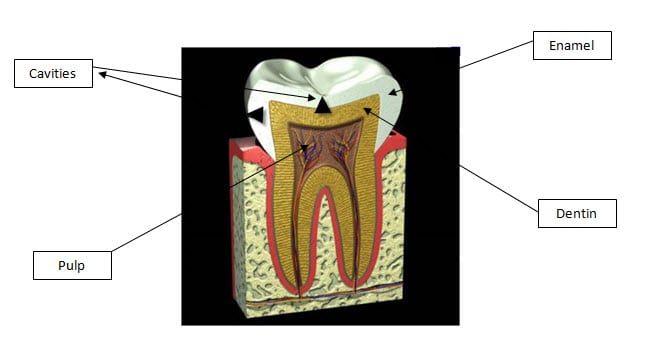
A little understanding of dental anatomy helps here. The outer layer of teeth, the enamel, is the hardest substance in your body. Because its composition is predominantly mineral, it is possible to have decay throughout that layer without experiencing any sensation. In fact, it is even possible for your dentist to drill that part of the tooth (in most cases) without pain. The next layer under your enamel is called dentin. Decay can travel into the dentin – where it usually spreads more quickly, because it is not as hard – and a person still may not experience pain.

By the time a tooth that is decayed hurts, the decay has generally travelled so far that it nears the innermost layer – the pulp. The pulp contains nerves and blood vessels – so, naturally, pain becomes a factor. If a patient is lucky enough to have enough tooth structure remaining, chances are that the tooth will need a root canal if it is to be saved. Otherwise, extraction is the usual alternative.

One lost tooth can lead, in turn, to still other dental problems. Most notably these include shifting teeth, TMJ problems, periodontal problems, cosmetic difficulties or simply difficulty chewing. It may even lead to the loss of more teeth – not to mention the fact that tooth replacement options can become rather expensive.

Hopefully, just understanding that a lack of pain does not equate to a lack of problems will prompt some readers that haven’t seen a dentist in a long time to do so. Sometimes people fear learning that they have cavities that need to be treated, and so they put off the examination. Consider, however, that it is better to learn you have five teeth that need fillings, than to learn you have several that have to be extracted.


The Basics of Dental Care

The Basics of Dental Care

abc

In almost any field there are basics, the fundamental facts or principles from which other truths can be derived.

Without an understanding of these basics we lack the building blocks for greater knowledge or competence.  For example, before we can write we learn our ABCs.   Geometry first requires an understanding of arithmetic, and so on.

Lacking these basics, we can become lost in a sea of information, lacking the correct drops of water that hold the answers to our questions or allow us to be effective.

Know the basics of automotive care and you are likely to have a car that runs well and needs few repairs.   Understand the basics of grammar and you can communicate.

What, then, are the basics of dental care?

While there are several key concepts which I cover in some of my earlier articles, there is one often overlooked principle I want to briefly cover herein.

Let’s first assume you are already in good dental health or, perhaps you weren’t, but now you got things under control.  You are starting off with a “clean slate.”  So, what do you do now?

The simple answer is taking a look at what got you there.

You spent months and maybe hundreds, even thousands, of dollars to handle dental problems that may not even have been causing you pain.  Things feel good and you have gotten the clean bill of dental health from your doctor.  What now?  Continue to do what fixed the problem.

  • Did you start brushing after meals?  Good.  Continue.
  • Did you change your diet to reduce refined carbohydrates?  Good.  Continue.
  • Do you floss every day?  Good.  Continue.
  • Do you come back for your regular visits?  No?!  Why not?

If that was a successful part of the formula, don’t make the mistake I see so many people commit.  There is probably many a dentist who will vouch for the fact that patients come in to them and say:  “Yeah, I had a bunch of dental work done somewhere about fifteen years ago and it is starting to come apart.”  When asked about the time of their last dental visit:  “Oh, it was around then.  Since my teeth were fine, it didn’t see the point of going in for a dental visit.”

Didn’t see – that’s a key point.  There are many conditions that the patient neither sees nor feels.  More importantly, dental health has a direct relationship to overall health.  So the fact that one doesn’t feel gum disease, bone loss, dental cavities or oral cancer – especially in the early stages is a poor excuse not to see your dentist.  Regular checkups are fundamental to defending yourself against serious problems.  Caught early, your treatment can be approached conservatively, saving you time in the dental chair, the potential discomfort of extensive work and, of course, money.

Why is it that patients who visit the dentist regularly seem to need less dental work?  I’d like to think it also has to do with their increased care and effort – but that effort includes keeping up with regular visits.  These checkups can prevent small problems from turning into big ones and help to keep your existing work in good shape.  Don’t be a penny wise and a pound foolish.  See your dentist at least twice a year.

Why You Might Have a Cavity Without Even Knowing It

Why You Might Have a Cavity Without Even Knowing It


Another cavity?!

Consider this article a public service announcement. I really dislike seeing patients lose teeth to tooth decay that could have been prevented.

My philosophy is simple: if a patient has a dental problem, I address it—but just as importantly, I give them the tools and knowledge to prevent future issues. Ideally, most visits after that are just for routine maintenance.

Why You Might Have a Cavity and Not Even Know It

Unfortunately, I often meet new patients with teeth so badly decayed there’s little chance of saving them. Just as frequently, I see people who finally schedule a checkup—often after years away from dental care—shocked to learn they have cavities. Many assume they lost a filling, when in fact, a chunk of enamel has broken off.

So why the surprise?
Most people believe cavities are supposed to hurt. Sometimes they do. But in the early stages, they’re usually painless. By the time a tooth actually hurts, the cavity has likely reached a serious stage. Often, I’m deciding whether to attempt a root canal—or whether extraction is the only option. A basic understanding of dental anatomy helps explain why.

Scroll down to the illustration below.

The outer layer of your tooth—enamel—is the hardest substance in your body. It’s made to last a lifetime and helps you chew your food efficiently. But here’s the key: it doesn’t have nerves. Enamel is more than 95% mineral. The rest is water and organic material. Because it lacks nerves, it doesn’t feel anything. That’s useful—you wouldn’t want pain every time you bit into food. But it also means decay can silently destroy it without causing any warning signs.

Even when decay reaches the underlying layer—dentin—you may still feel nothing. Only when it approaches the soft center—the pulp, where nerves and blood vessels live—do you usually feel pain. By then, the damage from a cavity is often extensive.

To make matters worse, decay doesn’t spread in a straight line. Take a look at the black triangles in the diagram. A cavity often starts at a small point on the outside and fans out wide inside the enamel. The tooth might look intact—until the undermined enamel collapses due to internal damage.

diagram showing cavity progression through enamel and dentin toward the pulp of a tooth

How Dentists Detect a Cavity Early

Cavities often form between teeth—places you can’t see. Even I need x-rays to catch them in those areas. Dentists rely on visual checks, dental probes, x-rays, and sometimes laser detection to find decay. Even then, spotting it under old fillings can be tricky.

Modern dental technology has made early cavity detection far easier. Digital x-rays produce high-resolution images with minimal radiation. Laser-based devices, such as DIAGNOdent, can detect tiny lesions before they become visible to the eye. These advances allow dentists to restore enamel with less invasive procedures—often saving the tooth before it ever hurts.

Preventing Future Cavities

Regular dental visits, daily brushing and flossing, and a balanced diet are the best ways to stop cavities before they start. Using fluoride toothpaste and limiting sugar intake help protect enamel. If you’d like to learn more about keeping your enamel strong naturally, read this related article.

Another simple habit that makes a difference is drinking water throughout the day. It rinses away food particles and helps neutralize acids that can erode enamel. If you sip coffee, soda, or juice often, consider rinsing with water afterward. Saliva production also matters—dry mouth, caused by medications or dehydration, increases your risk of cavities.

For people prone to recurrent decay, your dentist may recommend professional fluoride treatments or prescription-strength remineralizing pastes. These can rebuild weakened enamel and reduce sensitivity before a cavity takes hold.

The Takeaway

If someone you care about hasn’t seen a dentist in a while, ask them to read this article. You might help them avoid discomfort, costly procedures, and even tooth loss. Don’t wait for pain to signal that something’s wrong—a silent cavity can be far more damaging than one that hurts.

And for those thinking, “If it gets bad, I’ll just pull it,”—well, sometimes that’s necessary. But that’s a conversation for another day.

🦷 Learn more: How Cavities Form – American Dental Association

diagram of a cavity forming in a tooth between the enamel and dentin layers