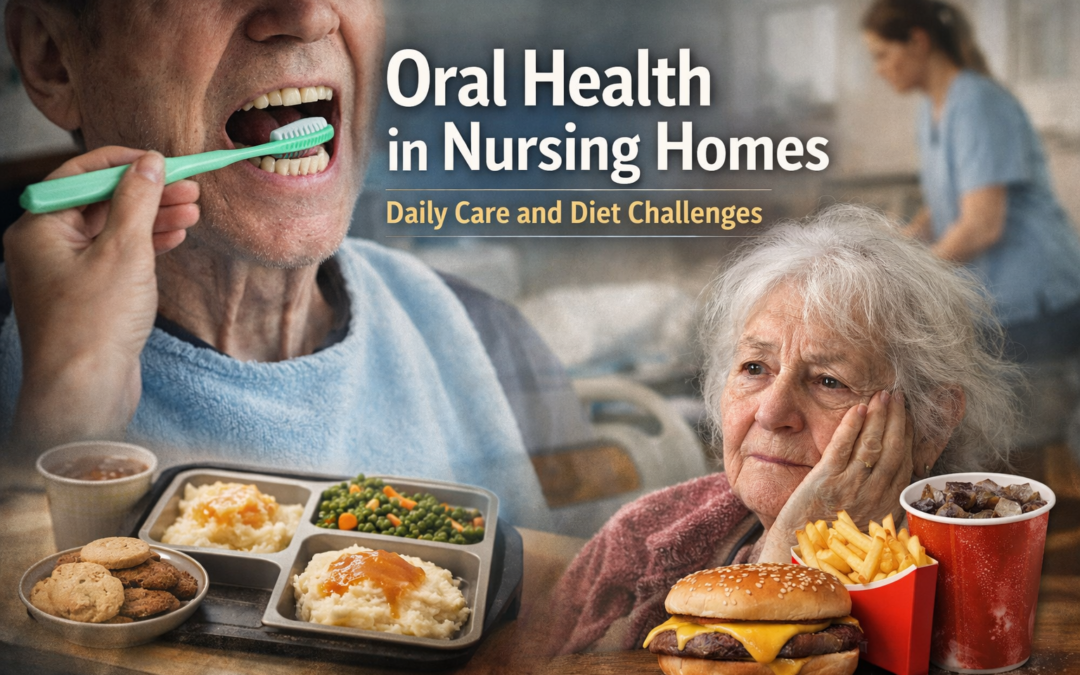
This article isn’t about blame. It’s about understanding why oral health so often declines in long-term care, even when good intentions are present, and why the causes are usually found in daily habits and systemic realities rather than in dentistry alone.
Oral health in nursing homes is currently shaped less by dentistry itself and more by daily care routines, diet, and the realities of institutional life.
Daily Habits Drive Oral Health More Than Dentistry Alone
Dentistry is episodic. Oral disease is not.
Teeth and gums are affected every single day by hygiene, diet, medications, and saliva flow. A dentist may visit a facility periodically, but plaque accumulation, inflammation, dry mouth, and dietary exposure occur continuously. When daily care falters, even the best dental intervention has limited staying power.
This is why the decline we see in long-term care cannot be understood purely through the lens of procedures or access to providers. The real drivers of decline are much more mundane—and much harder to fix.
The Reality of Daily Oral Care in Long-Term Care Facilities
Oral Care Is Often Nobody’s Job
Nursing home staff are almost universally overworked. Their responsibilities are extensive and often overwhelming, and oral care frequently falls to the bottom of the priority list. Toothbrushing, flossing, and denture care are commonly viewed as optional or cosmetic rather than medically important.
In practice, this means:
- Toothbrushing may be skipped or done inconsistently
- Dentures may remain in the mouth overnight or go uncleaned
- Sore spots, broken teeth, and loose appliances may go unnoticed until pain becomes severe
This is not usually a reflection of indifference. It is a reflection of system strain.
Some Patients Cannot Perform Oral Care—Others Can, but Don’t
An important distinction is often overlooked when discussing daily oral care in facilities.
Some residents are physically or cognitively unable to care for their mouths. Stroke, paralysis, tremors, generalized weakness, advanced arthritis, and dementia can make even basic toothbrushing impossible without assistance. These patients depend entirely on others for oral hygiene, and when help is inconsistent, decline is predictable.
Others, however, are physically capable of brushing and flossing but simply do not. This may be due to lifelong habits, depression, apathy, cognitive decline short of dementia, or a belief that oral care “no longer matters.” In many cases, these patterns long predate facility placement.
Both situations can lead to the same outcome—but for very different reasons—and both require different expectations and interventions.
Many Residents Have No History of Preventive Dental Care
For a surprising number of residents, entering a nursing home and qualifying for state benefits represents the first time in their lives they have had any access to dental care at all. Preventive dentistry may never have been part of their routine.
This often creates unrealistic expectations. Some patients assume that comprehensive dental services—crowns, bridges, root canals, surgery, even orthodontics—will now be available simply because they are in a healthcare facility. I once encountered a younger resident who was genuinely outraged to learn that braces would not be provided in a nursing home setting.
These expectations clash with reality, and the disappointment can further erode trust and engagement with even basic care.
Diet, Nutrition, and Their Role in Oral Health Decline
Institutional Diets vs Dental Reality 

Many nursing homes employ dietitians, yet the food residents consume is often poorly aligned with dental health. Soft, highly processed, carbohydrate-heavy meals are common. Sticky foods, frequent sugars, and liquid nutritional supplements can dramatically increase therisk of decay and gum disease.
These diets may meet caloric and compliance needs, but they can create an environment where oral disease thrives—especially when oral hygiene is inconsistent.
Family Food, Takeout, and Fast Food
Food also carries emotional weight. Families often bring outside food to comfort loved ones who complain about facility meals. Ambulatory residents with financial means may order takeout. Unfortunately, these foods are frequently fast food or sugary comfort items.
It’s important to be realistic: many residents have spent a lifetime eating this way. It would be unreasonable to expect those habits to suddenly change in a structured care setting. Still, the cumulative effect on oral health can be significant, especially in the absence of adequate hygiene.
Why Tooth Loss Accelerates After Placement
When reduced oral care, a cariogenic (cavity-causing) diet, medication-induced dry mouth, and limited early intervention converge, tooth loss accelerates. Teeth that might have been saved with earlier attention are instead lost to infection, fracture, or pain.
Patients should not be getting sicker simply because they are now in a structured care environment—but too often, they are.
Depression, Appetite, and the Feedback Loop
Oral health decline does not occur in isolation. Mouth pain reduces appetite. Difficulty chewing limits food choices. Tooth loss affects speech, appearance, and social interaction. Many residents become withdrawn, embarrassed, or depressed.
Depression then reduces motivation for self-care, including oral hygiene. The cycle reinforces itself, and the mouth becomes both a victim and a contributor to overall decline.
What Families Should Understand About Oral Health in Nursing Homes
Oral health in nursing homes depends far more on daily realities than on ideal dentistry.
Families should understand that:
- Daily care matters more than perfect treatment plans
- Some residents cannot physically or cognitively perform oral hygiene
- Others may choose not to, despite being capable
- Diet plays a major role, even when well-intentioned
- Rapid decline is common—but not always inevitable
This article is intended to help families set realistic expectations and understand why oral health changes so quickly after placement.
What This Article Is—and Is Not
This is not an indictment of facilities or their staff. It is not a promise that better care will prevent all tooth loss. And it is not an argument for aggressive dental treatment in every case.
It is an explanation of why oral health deteriorates quietly and predictably in many settings—and why understanding daily care and diet is the first step toward better outcomes.
Conclusion
Oral health in nursing homes is about dignity, comfort, and daily realities. Teeth do not fail overnight, and they do not fail in isolation. When daily care is inconsistent and diet is unfavorable, decline follows—even with access to dental providers.
Understanding these factors is essential. Deciding when treatment helps—and when it may not—is the next conversation families need to have.
Helpful Resources
Internal reading on ToothWiz:
- Ethics in Dentistry: When “Right” and “Wrong” Aren’t Always the Same
- Is Your Toothache a Dental Emergency?
- Diet and Oral Health
External resources: