
by Dr. Richard J. Walicki | Nov 26, 2011 | Cosmetic Dentistry, Dentistry
In today’s challenging economic climate, people find themselves having to make every dollar they spend count. As a result, individuals considering cosmetic dental work face the additional problem of not having such procedures be covered by dental insurance. For some, that puts treatment a little farther out of reach.
While it may be a common perception that cosmetic dental procedures are completely elective, many prospective job seekers have come to realize that having an unattractive smile could make the difference between being hired and being passed over for employment.
One of the most common methods used to improve flaws in a person’s smile has been the use of dental veneers. These are typically thin shells of porcelain that are bonded to the surfaces of a patient’s teeth and can be used to correct a variety of problems: from unsightly old fillings to crooked teeth or chips in the teeth. They can also close gaps, lengthen short teeth, or permanently brighten discolored teeth.
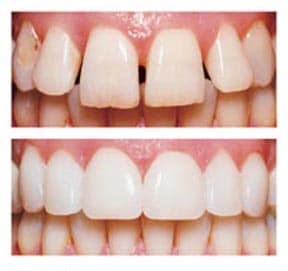 Porcelain has been traditionally chosen for the job because it looks natural, transmits light beautifully, and has excellent color stability. The life expectancy is also good, with many veneers lasting up to fifteen years. Unfortunately, at $1,000 to $2,500 per tooth, they can also be rather expensive.
Nevertheless, apart from the cost, their many advantages have made them a popular choice. There are several disadvantages, however. Among these is that most porcelain veneer procedures are irreversible. This means that the slight amount of tooth reduction necessary to create a natural appearance commits the patient to future veneers. Also, in most cases, multiple visits are required – with anesthesia. And should a veneer ever become damaged, or should it break, it is not easily repaired. It typically requires replacement.
Fortunately, an alternative form of treatment exists. As long as the dentist does not have to restore tooth decay as well, it can generally be performed without anesthesia.
This is known as a direct composite resin veneer. Instead of using porcelain to cover the tooth, a dentist places a very thin layer of composite resin – essentially, a tooth-colored filling material – over the tooth in order to create a similar effect. Whereas in the past, this solution sometimes resulted in a dull, lifeless appearance for a tooth, current composite resins available to dentists have improved significantly. Products on the market today have enhanced physical and optical properties that also allow the dentist to accomplish a dramatic change in a patient’s appearance in as little as one visit.

Many composite resins can also be placed with little or no alteration of the tooth’s structure. Every person’s case is different, however. Your dentist should be able to give you an idea of what will be required to obtain the optimal esthetic result for your case. Expect to pay anywhere between $350 to $695 per tooth.
What if you break or chip a composite resin veneer? The repair is usually easy to accomplish in a single visit and at a significantly reduced cost to replacing a porcelain veneer. Are there any disadvantages? Frankly, these are among the most technique sensitive of all dental veneers. The skill of the dentist and their attention to detail are critical elements in achieving a good result.
Talk with your doctor about which options are right for you. It may still be possible for you to enjoy the benefit of veneers – at nearly half the cost. Most dental offices today offer flexible financing options, many of which are interest free. Your perfect smile may be much closer than you think!

by Dr. Richard J. Walicki | Oct 31, 2011 | Uncategorized
“Doc, I think I have a cavity. Every time I drink some soda, my tooth hurts.”
Experience tells me it’s certainly possible, so I’ll naturally take a look – but quite often, I already know that what is causing the discomfort is an entirely different issue. Patients are often surprised when I explain that while I understand this area hurts, it’s not a cavity.
Hot, cold, air, or sweets – the triggers can be different for different people – but the effect is the same: dental pain. For some, it can be mild or tingly. For still others, it can be excruciating and intense. And yet, this can occur without decay.
So what’s going on? Often, it has to do with changes to the tooth enamel. This protective outer layer of your tooth is both the hardest substance in your body and it acts as an insulator to the inner and more sensitive dentin layer, as well as the pulp. Hard as it is, enamel is still subject to changes that can have consequences for your comfort and tooth function.
So what causes enamel to become damaged or thinned?
In a word – life. But here are a few practices or habits that tend to accelerate changes:
— Dietary factors such as acidic drinks (sodas, fruit juices, wine) and foods
— Teeth clenching and grinding
— Dehydration of teeth caused by a dry mouth condition (medications or insufficient water intake)
— Digestive problems such as acid reflux
— Damaging habits (using your teeth in ways you shouldn’t, such as opening things with them)
— Improper brushing (overly aggressive or excessively abrasive)
The result of thinned enamel – also referred to as enamel erosion – is sensitivity. Gum recession can also produce a similar result because this exposes the root surface, which is not covered by enamel. Nevertheless, the result is comparable. The teeth hurt.
Yet another popular activity – tooth whitening – can lead to sensitivity due to the cleansing activity of peroxides that are used to remove stain and debris within and between the complexes of enamel rods (the basic unit of tooth enamel). It also removes something called smear plugs (debris in the dentin tubules), and this increases the conductivity of fluid that exists in the tooth’s inner layer, the dentin. When the fluid backs up – once again, you experience pain.
In many cases, desensitizing toothpastes can help. The active ingredient is typically potassium nitrate. It usually takes several weeks of continued use to experience relief. If this does not resolve your symptoms, your dentist may be able to administer a desensitizer that provides instant relief. Any persistent pain should be evaluated by a dental professional in order to prevent more serious and expensive problems.
by Dr. Richard J. Walicki | Oct 30, 2011 | Cavities, Cavity, Dentistry
Bad teeth may not only have negative consequences for your health, they can cost you a job.
Many people with visibly unattractive teeth go through life avoiding eye contact with strangers for fear of having to smile back or even to make small talk. Not infrequently, when such people do talk or feel compelled to smile, they cover their mouths with their hand.
Unfortunately, in a job interview, this will not go over well. Yet, for the person with dental problems, to smile or talk would compel them to reveal something they are deeply embarrassed about – their teeth. There is an old saying that you don’t get a second chance to make a first impression. And first impressions are typically based upon appearance. Your teeth, or even your breath, can either enhance or completely destroy your chances of landing that new position.
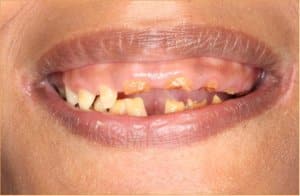
Teeth that are blackened by decay, are crooked, discolored, or even missing may not just be embarrassing – they may turn off prospective employers. Also, hiding your smile during an interview can be one of the worst things you do. A smile and a confident response project self-assurance and make a person appear likeable.
This is just one of many subtleties employers may take into account when interviewing a prospect. Teeth that are stained by coffee, tea or cigarettes may distract the interviewer from what is really important – you and your qualifications.
Likewise, coffee and cigarettes leave a smell that can be easily detected. Apart from not showing visible stains, a prospective job-seeker should also avoid certain other foods shortly before their interview. The most obvious offenders are garlic, onions, anchovies or tuna. But it is also prudent to steer clear of such lunch meats such as salami, pepperoni or pastrami before your interview. Strong cheeses, such as Roquefort, Camembert, or Bleu cheese also leave persisting odors and, similarly, should be avoided.
Women are cautioned to avoid getting lipstick on their teeth. Softer shades or lip gloss are preferable to bright red. Lipstick on your teeth can give you the appearance of being careless or hurried – which may also sink your prospects the moment you open your mouth to speak.
In today’s economy, competition for work is fierce. Applicants need every advantage they can get to land the job. Applicants’ teeth need to be as good looking as the way they dress, comb their hair, or even shine their shoes, because employers can afford to be selective with so many qualified people looking for work.
Recent research conducted in the U.S. estimates that those prospects with well-maintained teeth experience as much as a 58% higher chance of finding a job than those whose teeth are perceived as unattractive. It also seems that potential employees who have invested in dental treatment with cosmetic dentistry are regarded as more professional, congenial, and trustworthy.
Individuals seeking employment can increase their chances of getting work by taking several steps before their interview. These include getting a dental examination, completing unfinished restorative work and possibly even having cosmetic dentistry. The number of job seekers getting their teeth whitened and getting porcelain veneers placed (as a way to increase their chances of hiring success) is increasing for these very reasons. So what do you do if you can’t afford a Hollywood smile? Don’t worry, there are affordable answers.
If you need a lot of work and it is out of your reach, temporary cosmetic solutions such as a Snap-On Smile® can make a dramatic change in your appearance – very often at less than one quarter the cost of a more permanent solution. This is on the order of a functional, but temporary, smile design that snaps over your natural teeth. Once you land the job and start making an income, you can consider something more permanent!
by Dr. Richard J. Walicki | Oct 25, 2011 | Uncategorized
by Paul Easton
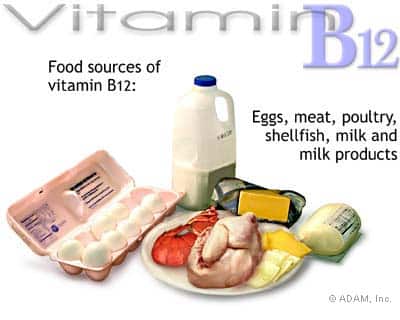
In today’s society, people don’t seem to exercise their option to consistently take in healthy food. Consequently, many people are not getting many of the critical vitamins that they require. B12 vitamins are actually one of the essential nutrients in the B complex of vitamins that the body needs to function well.
When an individual does not have the proper vitamins, it takes a toll on their body. Vitamin B12 deficiency warning signs can fall into the categories of both mental and physical .
Individuals that don’t have an adequate intake of B12 might find it difficult to concentrate. They can experience both confusion and disorientation even if they are quite young. If the deficiency is sufficiently extreme, it can cause a person to experience episodes of delusion. Vitamin B12 deficiency affects the nervous system.
This can cause a person to experience numbness in the arms or legs. People that suffer from a Vitamin B12 deficiency might also have trouble maintaining their balance and could possibly experience frequent headaches.
A lack of Vitamin B12 can also affect the digestive system. A person may experience nausea, which can also lead to vomiting. Heartburn and bloating are two additional problems that could be actually associated with having a B12 deficiency. Many individuals experience unwanted weight loss.
A vitamin B12 deficiency can even cause constipation or, conversely, diarrhea. The latter can lead to anemia, which is actually a complication that, when severe, may generate serious illness.
There are a few other side effects that are not always recognized as a vitamin B12 deficiency. Many people manifest depression which was actually initiated by a vitamin B12 deficiency. Certain other sources directly link a deficiency of B12 to fatigue. B12 vitamins are needed to provide the body with the stamina people need to get through each and every day.
When a person does not receive enough of the vitamin, it can become remarkably difficult to do execute some of the most seemingly mundane activities. Persons may additionally experience shortness of breath while executing those actions. That is why it is recommended that folks who experience symptoms of a vitamin B12 deficiency to consult a physician immediately. There are a number of treatment choices available for those that have such a deficiency, but it is always better for the person to seek help before it becomes a problem.
Paul Easton writes about many different subjects. Learn about Vitamin B12 Shots and weight loss as well as the effects of B12 injections. More information and articles about B12 can be found at http://www.VitaminB12supplements.org

by Dr. Richard J. Walicki | Oct 21, 2011 | Uncategorized
by Casey Trillbar
We all know the drill when we go to a new doctor’s office. Provide your health insurance card and ID card for them to copy, fill out contact and emergency information, complete a comprehensive medical history form, and sign the HIPAA form. This last form generally provides you with information as to the privacy of your medical records, and while it is an important part of HIPAA, it is by far not the entire act.
HIPAA, or the Health Insurance Portability and Accountability Act, offers an “umbrella of protection” to consumers. It eliminates the previous fear of changing employers due to the potential loss of health coverage for one’s family in more than one way.
This act prevents employers (new or old) from excluding any employee from their group health insurance plan due to pre-existing conditions. It also prohibits any discrimination against an employee or family member based on medical history, any genetic information, and previous claims.
However, HIPAA still makes some provisions to allow for group health insurers to limit pre-existing condition coverage under certain circumstances. If care or advice was provided in the previous six months for a specific condition, it may be excluded from coverage or limited for up to 12 months after enrollment, while all other plan benefits are still in effect. Some plans have much shorter exclusion periods, while others have none at all.
In cases in which a pre-existing condition is eligible for an exclusion period, creditable coverage comes into the picture. Any medical coverage that was obtained for the previous 12 months will be considered creditable coverage, as long as the period between policies was less than 63 days. This coverage is then accounted for on an equitable basis: for every month of creditable coverage, the exclusion period is reduced by one month.
In cases of creditable coverage, proof will be required for it to be counted against the exclusion period. If you are leaving a job, a certificate of creditable coverage may be requested free of charge. In addition, when COBRA or other health insurance coverage ends, you will receive a certificate as well. If one is lost or not received, it may be requested for two years, free of charge, from the insurer.
This act also ensures that employees are able to obtain health insurance from an employer in cases of a significant qualifying event. These include the birth or adoption of a child, death of a spouse, divorce, or loss of previous health insurance. Referred to as special enrollment, this is not subject to the terms of open enrollment, but must be requested within 30-60 days of loss of coverage or qualifying event depending on the particular situation.
As you have seen, there is much more to HIPAA and health insurance than just the privacy of your medical records. Designed to help bridge some of the previous gaps in our health care system, it is just one of the legislative acts that aspires to improve health care in our country.
Casey Trillbar is the editor of the YourOnlineInsuranceAgent.com website which offers information, resources and online home, auto and health insurance quotes. For more information visit: http://youronlineinsuranceagent.com